
Strata and common area cleaning
Strata cleaning services on a scope the committee can check
The first thing an owner sees is the front door. Strata cleaning services for apartment blocks, townhouse complexes and mixed-use buildings across the Northern Rivers and the Tweed. A written schedule, the same cleaner each week, and a record the committee can actually read. Easy to book, fast quoting, cost effective.
Request a schedule and quote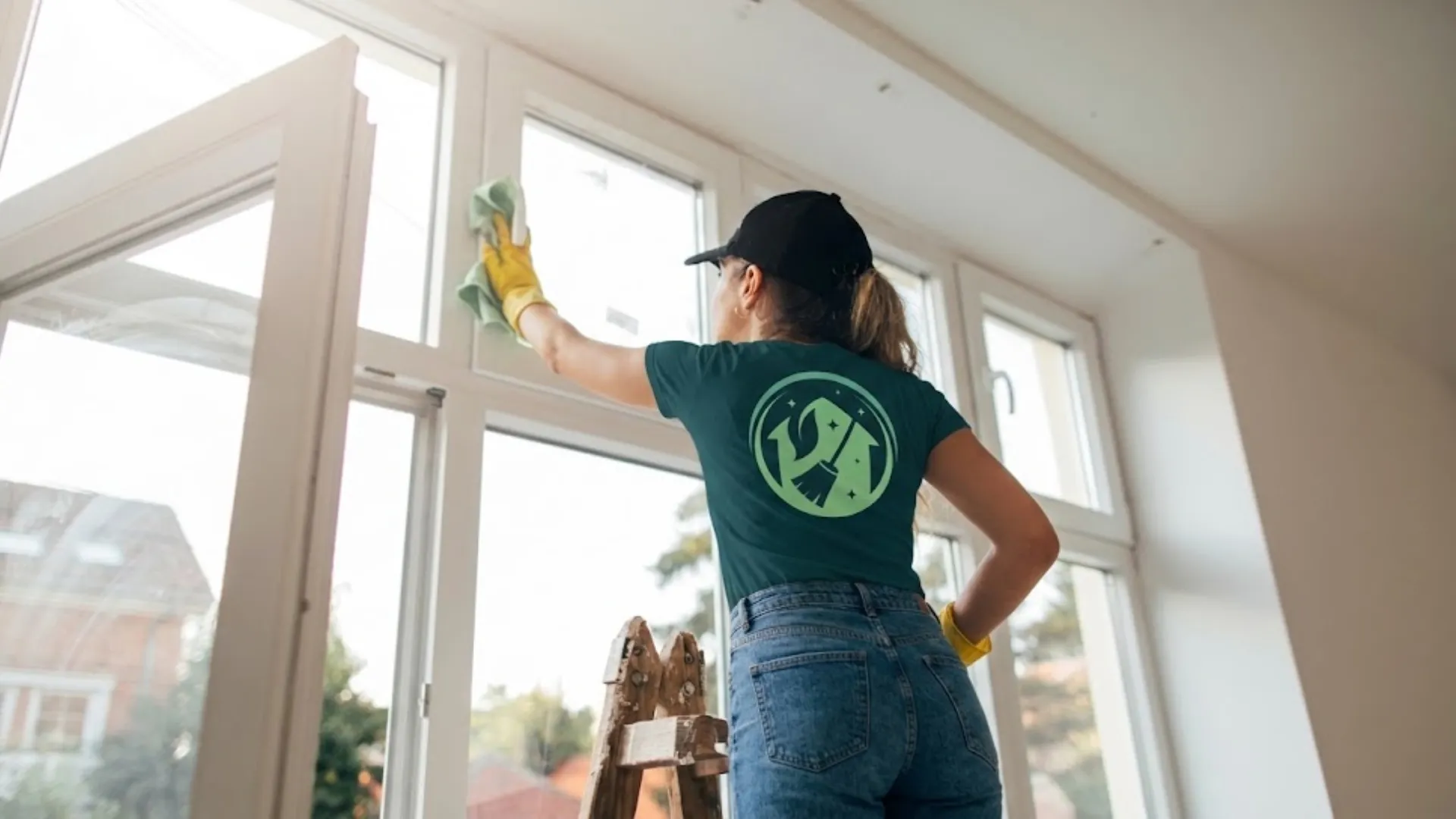
Strata cleaning is the regular cleaning of the shared parts of a building that no single owner is responsible for: the entry and lobby, lifts, stairwells and landings, corridors, common bathrooms, the carpark and driveway, and the bin room. TLB Cleaning cleans common areas across the Northern Rivers and the Tweed for owners corporations, strata managers and building managers.
The line that matters is common property versus lots. We clean common property, which is what the levies pay for. Inside an apartment is the owner or tenant’s own business, and if they want that done it is a separate arrangement with us rather than something quietly folded into the building’s contract. Keeping that line clean is what stops a common area budget from turning into an argument at the next general meeting.
Every common area, with a frequency against it
Six areas, and the periodic work that keeps each one from degrading between panics. Follow a row through to the service that does it.
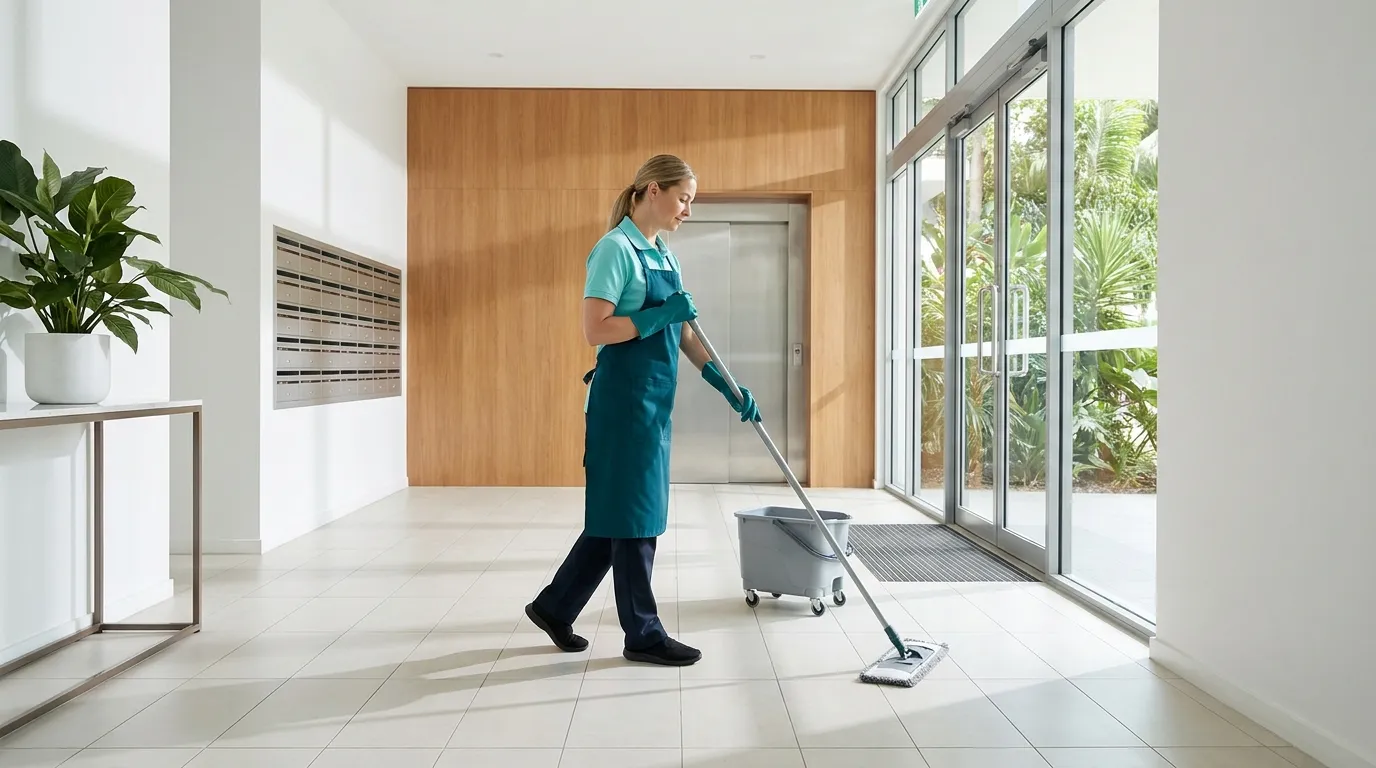
- Entry, lobby and letterboxesGlass doors and sidelights inside and out, entry matting, the floor mopped or vacuumed, letterbox bank wiped, cobwebs off the ceiling and light fittings. This is the ten square metres that sets what a prospective buyer thinks of the whole building.
- Lifts, stairwells and landingsLift floors, walls and the stainless doors and buttons, stair treads and risers, handrails, and the glass balustrades that show every fingerprint. Landings get the corners and the skirtings, which is where a thin scope stops.
- Corridors and common carpetVacuumed on the schedule, with spot treatment as things happen. Carpet in a corridor wears in one narrow lane and needs extraction once or twice a year on top of vacuuming, or the traffic path goes permanently grey.
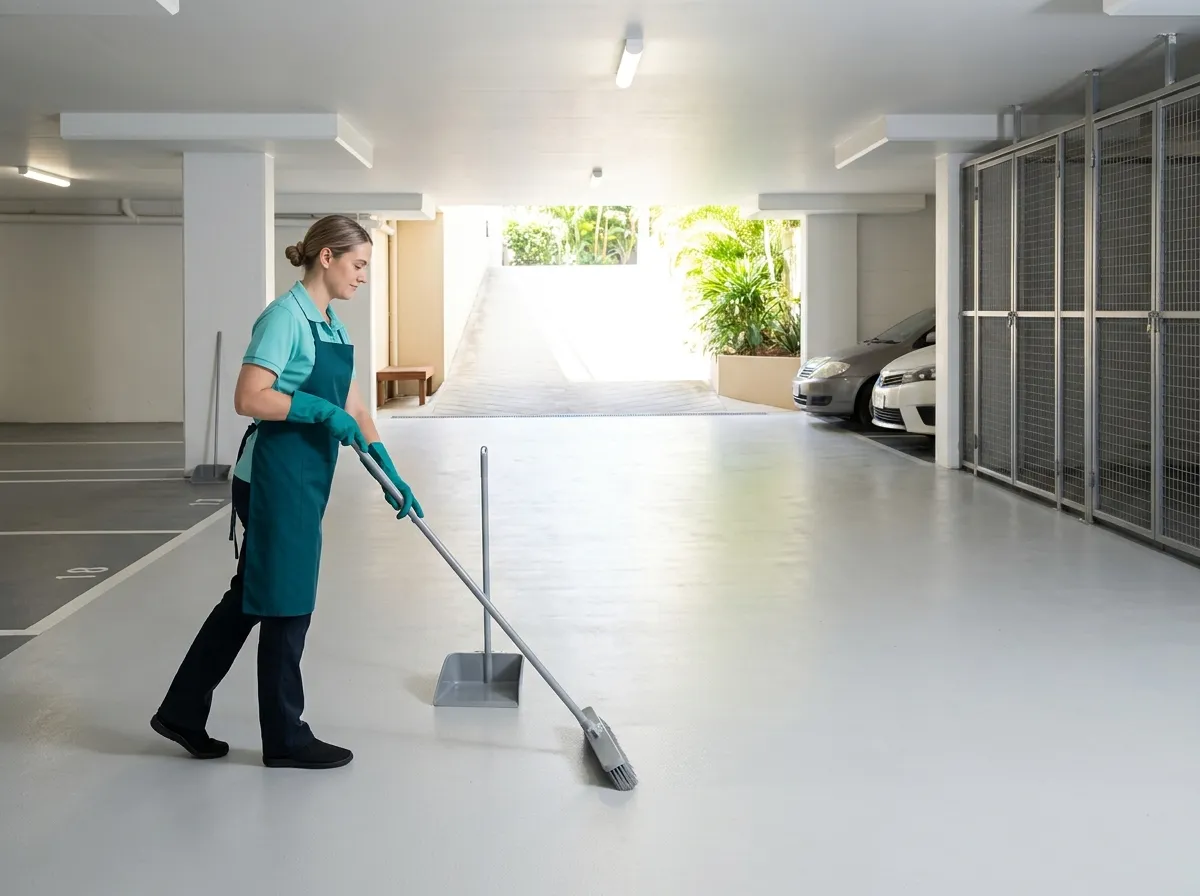
- Carpark, driveway and hard surfacesSwept, litter and leaves cleared, drains checked clear, oil spots treated. Concrete driveways, paths and the ramp go dark with algae in a Northern Rivers wet season and need pressure cleaning periodically rather than sweeping.
- Bin room and waste areaFloor hosed and squeegeed to the drain, walls and the chute door wiped, deodorised, and loose rubbish cleared from around the bins.
- Common bathrooms, laundries and pool surroundsWhere the building has them: toilets and basins cleaned and disinfected, mirrors, floors mopped, laundry benches and machine tops wiped, and the hard surround of a pool or BBQ area swept and hosed. Not the pool water, which is a pool contractor.
Do not cut the bin room to save money.
It is the first line a committee strikes out of a quote and it is the one that comes back hardest. A bin room that is not hosed and deodorised on a schedule becomes a smell in the lift lobby within a fortnight in a Northern Rivers summer, then a cockroach problem, then a pest control invoice larger than the cleaning line you saved.
It is also the area most likely to put the owners corporation in the wrong. Waste that is overflowing, blocking access or sitting outside the room is a work health and safety exposure on common property, and it is exactly what a resident photographs and sends to council.
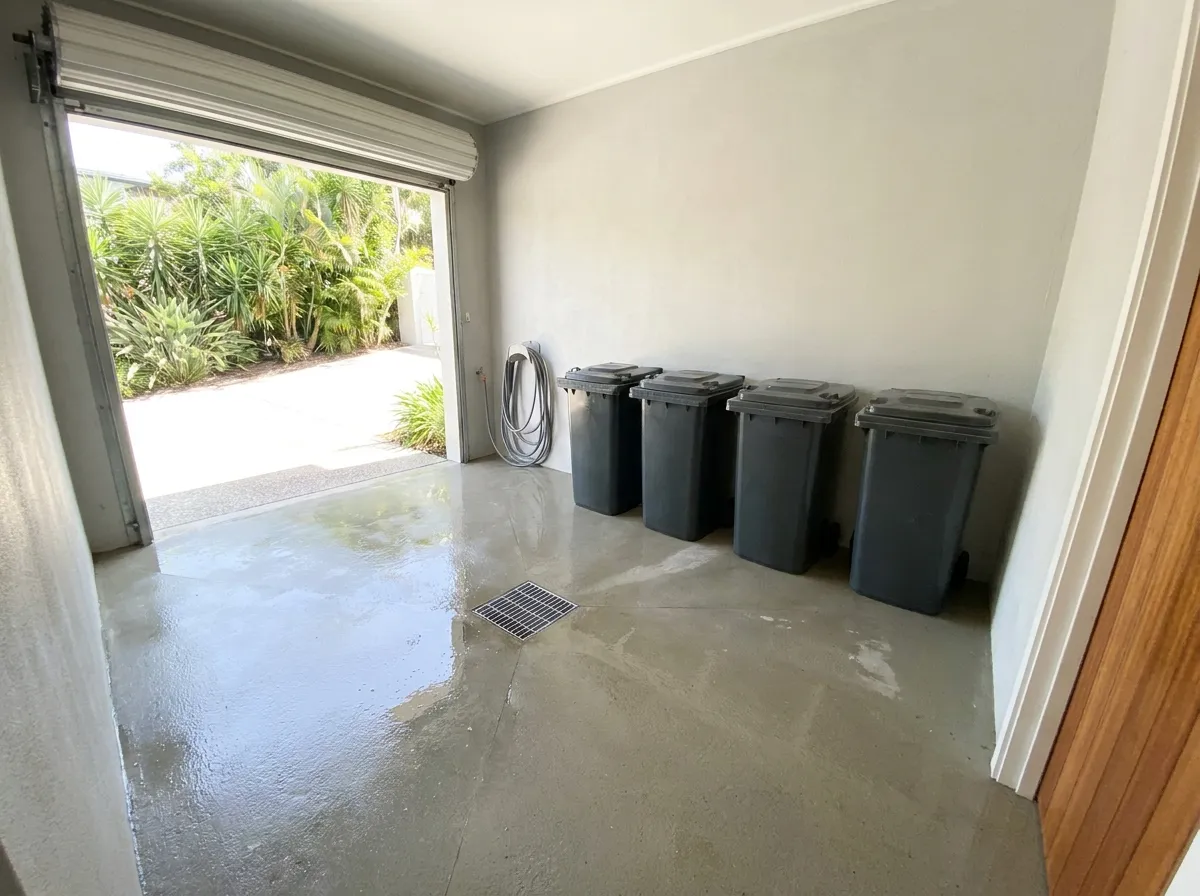 A bin room on a schedule. This is what the line item you were about to cut actually buys.
Three people read this page
Three different people read this page and they want three different things. A committee member wants to stop hearing complaints in the owners group chat. A strata manager wants a contractor who invoices correctly, holds current insurance and does not generate phone calls. An on-site building manager wants someone who turns up when they said and does not need supervising.
We write the scope so all three can use it. It names each area, what happens in it, and how often, with nothing left as "general tidy". That one document is what a committee approves, what a manager files, and what a building manager checks against.
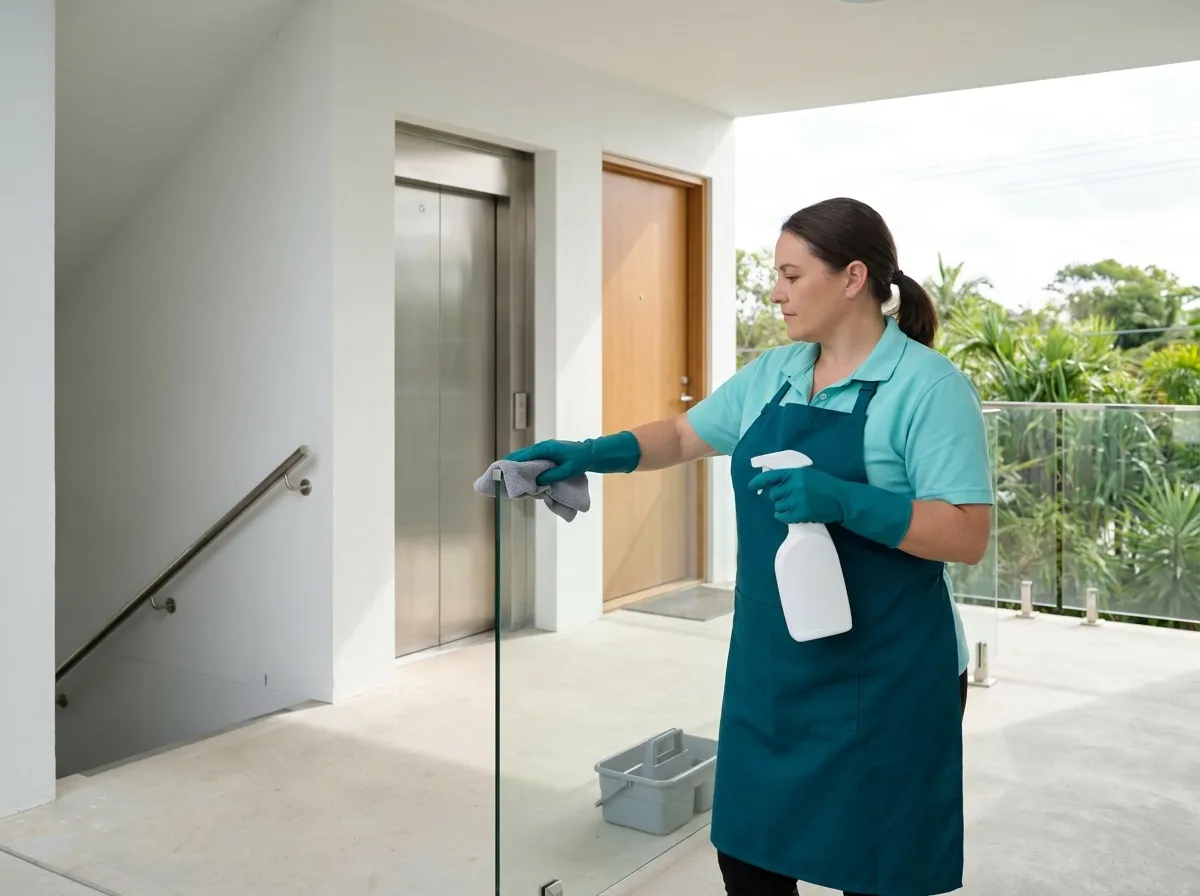
The other half of it is being visible without being intrusive. Residents live here. We work in the morning where we can, keep half a corridor walkable while we mop it, and never leave a cord across a fire stair. If a resident stops one of our team to ask about something inside their own apartment, we tell them honestly that it is not on the building’s scope and give them our number.
And you get told what happened. Not a glossy report nobody reads, just a short record of the visit and anything we found: a blown light in the stairwell, a lock that is not catching, a bin room door propped open again. Most of what a building manager needs to know, someone with a mop notices first.
Three ways a strata scope goes wrong
All three are visible in the document before a single visit happens.
It says "general clean"
Two words that cover everything and guarantee nothing. When a resident complains about the stairwell, nobody can point at a line that was or was not met, so it becomes a matter of opinion between the committee and the contractor. Every area on a real scope has a task and a frequency against it.
The frequency was set once, in 2019
Buildings change. A block that fills with short-stay tenants generates more lobby traffic and more bin room work than the same block did full of owner-occupiers. A scope that has never been reviewed is usually either paying for visits the building does not need or missing the ones it does.
Periodic work was never scheduled
Carpet extraction, external glass, pressure cleaning the driveway and high dusting are not weekly jobs, so they fall off a weekly scope entirely and only happen when something looks bad enough to trigger a special quote. Put them on the schedule with a month against each one and the building stops degrading between panics.
How TLB compares
Most committees are choosing between three quotes that all say “general clean”. These are the rows worth putting side by side.
| Why TLB Cleaning is different | A national brand or app | An independent cleaner | TLB Cleaning |
|---|---|---|---|
| What the scope says | A standard schedule applied to your building | Often a verbal arrangement | Every area listed with a task and a frequency against it |
| Who attends | Whoever is rostered, often a subcontractor | The same person | The same cleaner, and we can tell you their name |
| Subcontracting | Common | None | None. Our cleaners are employed by TLB |
| When someone is away | A different contractor | The visit is rebooked | Someone from the same team, and you are told first |
| Invoicing | Head office, on their cycle | Manual, variable | Monthly to the strata manager, referenced to the approved scope |
| Reporting | A portal login | Usually none | A short written record of each visit and anything found |
| Periodic work | Quoted separately when it looks bad | Usually not scheduled | On the schedule with a month against each item |
| Commitment | Often a fixed term | None | No lock-in, no minimum term, no exit fee |
Other premises we clean
Commercial cleaning for every kind of building across the Northern Rivers and the Tweed.
- Office cleaning
- Aged care, retirement and seniors
- Medical, clinic and salon cleaning
- Construction site
- Hospitality, venues and holiday parks
- Commercial kitchen cleaning
- Schools and childcare centres
- Gyms and fitness studios
- Retail and shopfronts
- Warehouses and industrial sites
- Factories
- Breweries
- Airbnb cleaning
- Commercial carpet cleaning
- Commercial pressure cleaning
- Commercial cleaning
Where we clean
Across the Northern Rivers, the Tweed and the Southern Gold Coast.
Northern Rivers NSW
- Lismore
- Goonellabah
- Alstonville
- Wollongbar
- Casino
- Kyogle
- Nimbin
- Clunes
- Bexhill
- Dunoon
- Ballina
- East Ballina
- Lennox Head
- Skennars Head
- Wardell
- Evans Head
- Broadwater
- Woodburn
- Coraki
- Bangalow
- Byron Bay
- Suffolk Park
- Mullumbimby
- Brunswick Heads
- Ocean Shores
- New Brighton
- Billinudgel
- Federal
The Tweed
- Murwillumbah
- Tweed Heads
- Tweed Heads South
- Banora Point
- Terranora
- Bilambil
- Bilambil Heights
- Chinderah
- Fingal Head
- Kingscliff
- Casuarina
- Cudgen
- Cabarita Beach
- Bogangar
- Hastings Point
- Pottsville
- Uki
- Burringbar
- Mooball
Southern Gold Coast QLD
- Coolangatta
- Bilinga
- Tugun
- Currumbin
- Palm Beach
- Elanora
- Burleigh Heads
- Burleigh Waters
- Miami
If a town isn't listed, ask us anyway.
Easy to book, fast quoting, cost effective
Managed for you. Set day, set team, a reminder before, a message on the way, and told first when something changes.
Book a walkthrough online, or send a text, ring us or email, whichever suits. We come and look at the premises rather than pricing it off a form.
Commercial work gets priced on the site, because hours on the ground are what set the number. You get a written scope and a price per visit, so you know what you're paying for. Anything outside that scope is quoted before it happens, not added afterwards.
It's cost effective because a written scope is something you can hold us to. You're buying a defined amount of work, on a set day, from the same team each visit. No lock-in term.
How it works
- Tell us about the job.
- We confirm the price and agree a time and access.
- We do the clean, and you get a message when we're on the way.
- If something needs fixing, you hear it from us first.
Working with us on your building
1. Who do you invoice, us or the strata manager?
Whichever the owners corporation prefers. Most of our strata work is invoiced monthly to the strata manager against the approved scope, with the committee copied so nobody is surprised at the next meeting. If the building is self-managed we invoice the treasurer directly. Either way the invoice references the scope, so it can be checked without a phone call.
2. Can you give us something to take to the committee?
Yes, and it is the main thing we produce. After the walkthrough you get a written scope with every common area listed, the tasks in it and the frequency of each, and a price per visit. It is written to be read out at a meeting and voted on, not to be interpreted. If the committee wants two options at different frequencies, we quote both.
3. Do you use subcontractors?
No. Our cleaners are employed by TLB and paid to the Cleaning Services Award, which matters more in strata than almost anywhere else, because it is what keeps one clear answer about who attends your building and who is insured. You get the same cleaner, and we can tell you their name.
4. What if a resident asks our cleaner to do something extra?
They tell them politely that it is not on the building’s scope and hand over our number. Nothing gets added to a common area visit informally, because the levy payers as a whole are paying for that time and one resident cannot reallocate it. If they want their own apartment cleaned, that is a separate private arrangement with us.
5. Will you work around residents?
Yes. We clean common areas in the morning where the building allows it, keep a walkable path while floors are wet, never block a fire exit or run a cord across a stair, and keep noise down before eight. If your by-laws set contractor hours, tell us at the walkthrough and the schedule is built inside them.
6. What happens if I get in touch?
We walk the building with you, top to bottom including the bin room and the carpark, and note what is actually happening rather than what the last scope said. Then you get a written scope, a price per visit and a suggested schedule for the periodic work. No obligation, and nothing to sign at the walkthrough.
Strata cleaning services, common questions
1. How much does strata cleaning cost?
It depends on how many levels and lifts the building has, how much common carpet and glass there is, whether there is a carpark and bin room, and how often you want it done. A weekly single-level townhouse complex and a three-times-weekly high-rise are different jobs entirely. That's why we quote rather than publish a flat rate that would be wrong for most buildings. Tell us the basics and you'll have a price back quickly, with no obligation attached to it.
2. How often should common areas be cleaned?
Lobbies and lifts in a building with more than about twenty lots generally need two or three visits a week, because entry glass and lift floors show traffic immediately. Stairwells, corridors and carparks usually work weekly or fortnightly. Bin rooms want at least weekly year round and more often over summer. Periodic work such as carpet extraction, external glass and pressure cleaning is once or twice a year on a set month.
3. Is the owners corporation required to clean common property?
In New South Wales an owners corporation has a duty under the Strata Schemes Management Act 2015 to properly maintain common property and keep it in a state of good and serviceable repair, and in practice regular cleaning is part of meeting it. What that means for a particular task depends on the scheme’s own by-laws. Your strata manager or NSW Fair Trading is the right source for your building. This is general information, not legal advice.
4. What is the difference between common property and a lot?
Broadly, a lot is the part an individual owns, usually the inside of the apartment or townhouse, and common property is everything shared: entry, lobby, lifts, stairs, corridors, external walls and roof, driveways and the bin room. Cleaning contracts paid from levies cover common property only. Where the boundary sits in a specific building is set by its strata plan, so check yours rather than assuming.
5. Do strata cleaners need insurance and inductions?
Yes. Any contractor working on common property should hold current public liability cover and workers compensation, and most strata managers set a minimum level and ask for the certificate annually. Larger buildings also require a site induction and a signed-in visit.
6. Can the same cleaner do the common areas and individual apartments?
They can, but the two should never sit on one invoice. Common area work is paid from levies on behalf of every owner, and an individual apartment is a private arrangement. Mixing them is how a committee ends up unable to explain a line item. We are happy to do both in one building, quoted and billed entirely separately.
Strata and common area cleaning
Start with a walk of the building.
Top to bottom, including the bin room and the carpark. Then a written scope, a price per visit and a schedule for the periodic work, ready to take to the committee.