
Brewery cleaning
Two buildings.
One lease.
Brewery cleaning across the Northern Rivers and the Tweed. The brew deck, the cellar and the drains on one standard, the taproom on another, and a scope that knows the difference. Tanks and lines stay with your brewers. Easy to book, fast quoting, cost effective.
Book a site walkthrough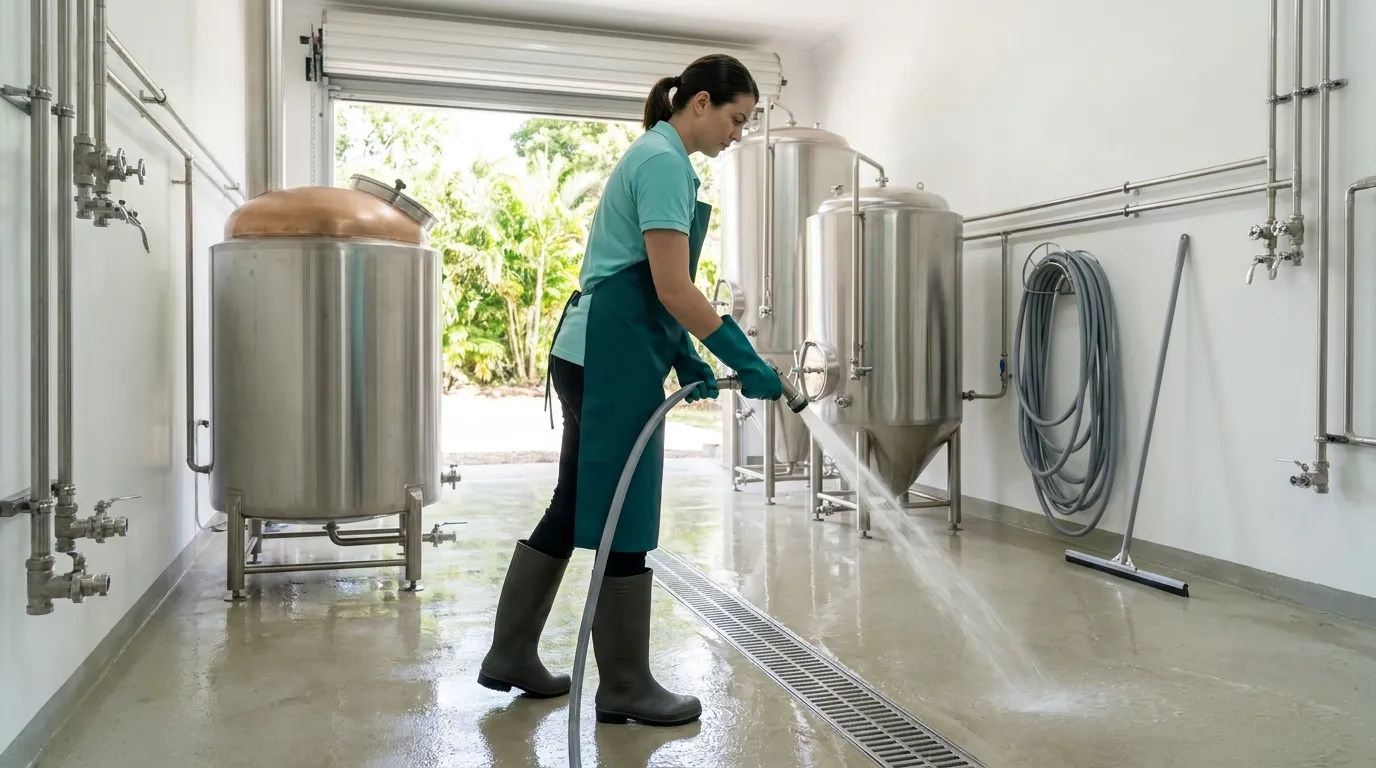
Brewery cleaning is the cleaning of a brewery’s environment: brew deck and cellar floors, trench drains and floor waste, tank exteriors and the walls and skirtings around them, the keg and packaging area, plus the taproom, bar, bathrooms and back of house. TLB Cleaning does this work across the Northern Rivers and the Tweed for craft breweries, taprooms and cellar door venues.
It stops at the outside of the vessel, and that is not a limitation we are apologising for. Cleaning in place — the caustic and acid cycles that clean the inside of tanks, lines and hoses — is part of making beer. It sits with your brewers, on your own schedule, with your own chemistry and your own verification, because it is the step that decides whether a batch is sound. Everything outside the vessel is a cleaning job, and there is a lot more of it than most brewery scopes account for.
We do not touch the inside of a tank, a line or a hose. Ever.
Clean in place is brewing, not cleaning. The cycles run caustic and acid at concentrations and temperatures that cause serious burns and permanent eye injury, the vessels themselves are confined spaces that need a permit and atmospheric testing before anyone goes in, and the whole process is what determines whether your next batch is infected. It belongs to your brewers, with your chemistry and your verification records, and any cleaning contractor offering to take it over is offering to ruin your beer with the best of intentions.
The second thing, and the one we would rather over-explain than under-explain: CO2. Fermentation produces it in volumes that matter, it is heavier than air, and it pools at floor level, in cellars and in tank pits with no smell and no warning — people have died walking into brewery spaces that looked completely ordinary. So we treat any low or enclosed space as unsafe until your people say otherwise, and walk out rather than push on.
Two standards, one building
Pick the side you are asking about. The third panel is the boundary, and it is the most important of the three.
Production side: floors, drains and tank surrounds
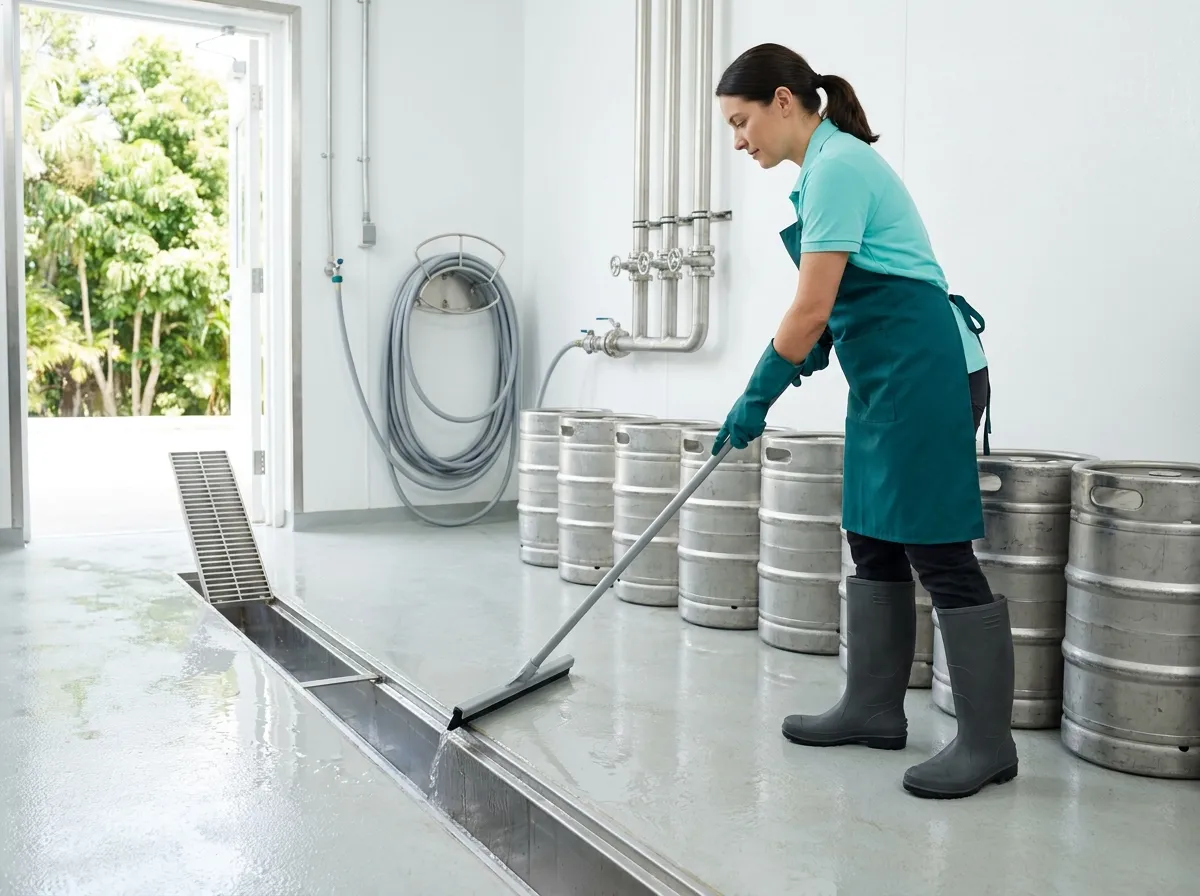
Brew deck and cellar floors washed down and squeegeed to the drain rather than left standing, trench drains and floor waste cleaned out and the grates lifted, tank and vessel exteriors and their legs and feet, hose racks, the walls and skirtings behind the line, and the keg and packaging area floor. Everything here is outside the vessel.
Book a site walkthroughTaproom side: the reset before you open
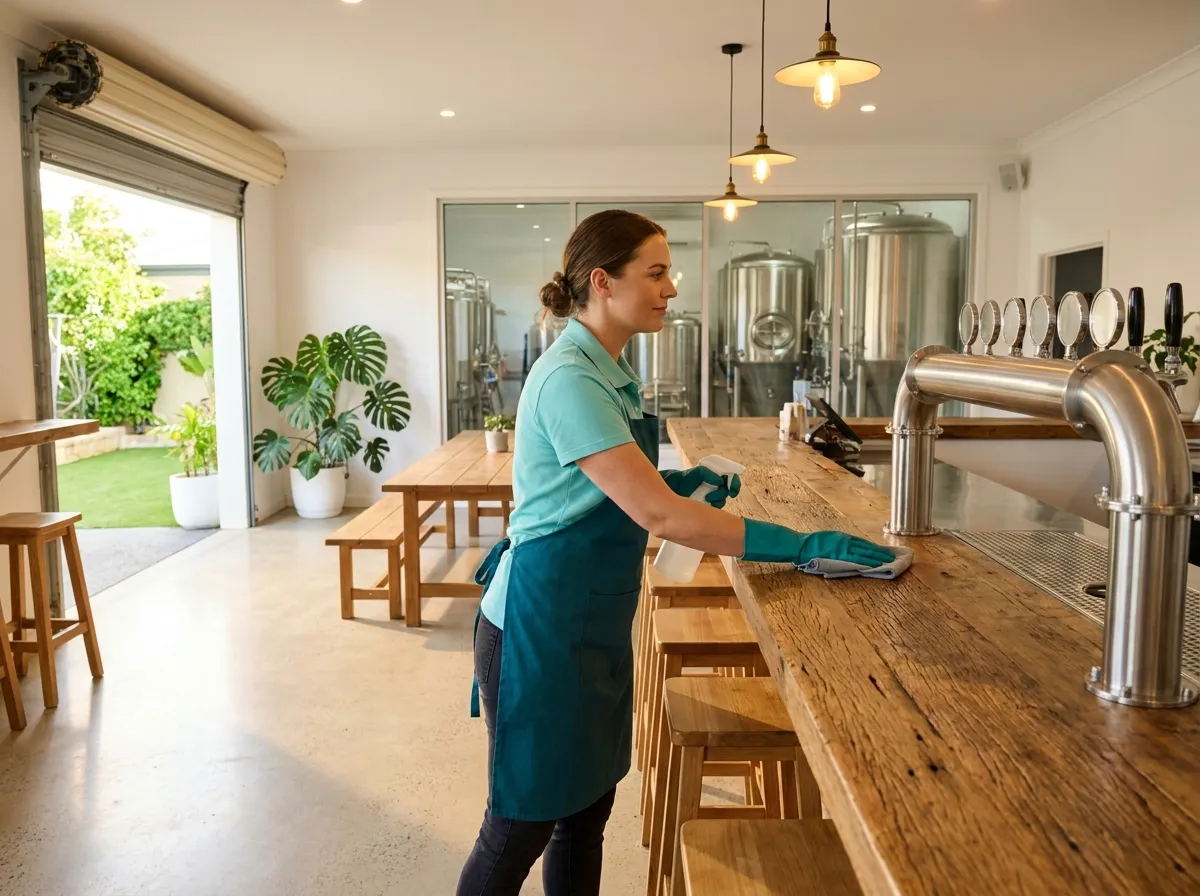
Bar top, the front and rail of the bar, the drip trays and the outside of the tap bank, tables and bench seats including the undersides, floors swept and mopped, glass and the roller door track, bathrooms cleaned and restocked, bins emptied, courtyard furniture and the paving swept. Finished and dry before your first customer. Beer lines and the inside of the taps are your cellar work, not ours.
Book a site walkthroughThe boundary: what stays with you
CIP of tanks, lines and hoses. Confined space entry of any kind. Keg washing, which is a CIP process. Beer line cleaning. Anything requiring isolation of plant that has not been locked and tagged by your team.
Book a site walkthroughGrates up, channel scrubbed, squeegeed dry. The most important surface in the building.Four things about drains
Every brewer already knows this. Every landlord and most venue managers do not.
A drain is a biology problem
Trench drains in a brewery carry sugar, yeast and beer all day, which is the ideal feedstock for the exact organisms you spend your working life keeping out of your beer. A drain left to itself becomes a reservoir of wild yeast and lactic bacteria, twenty centimetres from your open vessels.
Hosing is not cleaning it
A hose down the trench moves the visible material and leaves the biofilm on the channel walls and under the grate, which is where it actually lives. Grates come up, the channel gets scrubbed, and the corners and the outfall get done. That is a fortnightly job at minimum, not an annual one.
And a hose makes it airborne
High-pressure water into a dirty drain aerosolises everything in it and puts it into the air of the room, which is the worst possible outcome in a space with open vessels or a packaging line. Low pressure, mechanical scrubbing and a squeegee, in that order, is the method.
The taproom has them too
Bar floor wastes, the drip tray drain and the cellar floor waste under the keg stack all do the same thing on a smaller scale, and they are the usual answer to a taproom that smells stale first thing in the morning before anyone has poured anything.
Your CIP protects the vessel. Nothing protects the room.
A brewery is the only premises type on this site where poor environmental cleaning can cost you an entire batch. The organisms that spoil beer — wild yeast, Lactobacillus, Pediococcus — do not usually arrive from outside. They live in the building: in drains, in floor corners, on the ends of hoses left on a wet floor, in the biofilm under a grate nobody lifts. Your CIP protects the inside of the vessel beautifully and does nothing at all about the room the vessel is standing in. Take a batch, multiply by your wholesale value, and that is the number the floor and the drains are actually protecting.
The regulatory side is simpler than people expect and catches breweries out anyway. Beer is a food, which makes a brewery a food business, so the same obligation to keep premises, fixtures, fittings and equipment clean and sanitary applies to you as to a commercial kitchen — and if your taproom serves food, that side of the wall carries the full food service obligations too. Councils inspect both. The practical consequence is that your cleaning needs to exist as a written schedule with frequencies against each area, because that is the only form of it an inspector or a wholesale customer can actually look at.
Other premises we clean
Commercial cleaning for every kind of premises across the Northern Rivers and the Tweed.
- Office cleaning
- Strata and common area cleaning
- Aged care, retirement and seniors
- Medical, clinic and salon cleaning
- Construction site
- Hospitality, venues and holiday parks
- Commercial kitchen cleaning
- Schools and childcare centres
- Gyms and fitness studios
- Retail and shopfronts
- Warehouses and industrial sites
- Factories
- Commercial carpet cleaning
- Commercial pressure cleaning
- Commercial cleaning
Where we clean
Across the Northern Rivers and the Tweed.
Northern Rivers NSW
- Lismore
- Goonellabah
- Alstonville
- Wollongbar
- Casino
- Kyogle
- Nimbin
- Clunes
- Bexhill
- Dunoon
- Ballina
- East Ballina
- Lennox Head
- Skennars Head
- Wardell
- Evans Head
- Broadwater
- Woodburn
- Coraki
- Bangalow
- Byron Bay
- Suffolk Park
- Mullumbimby
- Brunswick Heads
- Ocean Shores
- New Brighton
- Billinudgel
- Federal
The Tweed
- Murwillumbah
- Tweed Heads
- Tweed Heads South
- Banora Point
- Terranora
- Bilambil
- Bilambil Heights
- Chinderah
- Fingal Head
- Kingscliff
- Casuarina
- Cudgen
- Cabarita Beach
- Bogangar
- Hastings Point
- Pottsville
- Uki
- Burringbar
- Mooball
If a town isn't listed, ask us anyway.
Easy to book, fast quoting, cost effective
Managed for you. Set day, set team, a reminder before, a message on the way, and told first when something changes.
Book a walkthrough online, or send a text, ring us or email, whichever suits. We come and look at the premises rather than pricing it off a form.
Commercial work gets priced on the site, because hours on the ground are what set the number. You get a written scope and a price per visit, so you know what you're paying for. Anything outside that scope is quoted before it happens, not added afterwards.
It's cost effective because a written scope is something you can hold us to. You're buying a defined amount of work, on a set day, from the same team each visit. No lock-in term.
How it works
- Tell us about the job.
- We confirm the price and agree a time and access.
- We do the clean, and you get a message when we're on the way.
- If something needs fixing, you hear it from us first.
Frequently Asked Questions
1. Will you do our CIP?
No, and you should be wary of anyone who says yes. CIP is brewing rather than cleaning: it runs caustic and acid at injuring concentrations, the vessels are confined spaces, and the cycle is what decides whether your batch is sound. It stays with your brewers, your chemistry and your verification records. We clean the room your tanks are standing in, which is the part that is usually under-served.
2. Can you work while we are brewing?
Some of it, and not all of it. The taproom, the amenities and the packaging area are straightforward. A live brew deck has hot liquor, caustic in use, wet floors and hose runs underfoot, so the honest answer depends on your layout and your day. We would rather book around your brew calendar than be an extra body on the deck on transfer day.
3. Do you clean the beer lines and the taps?
No. Beer line cleaning is cellar work on the same side of the boundary as CIP, and it affects what your customer tastes, so it stays with your team or your line-cleaning contractor. We clean the outside of the tap bank, the drip trays, the bar top and the floor and drain under it, which is where the stale smell in a taproom almost always comes from rather than from the lines.
4. How often should the drains be done?
Fortnightly at minimum on the production side, and weekly for a brewery running most days, with the grates lifted and the channel scrubbed rather than hosed. Taproom floor wastes and the drip tray drain want doing weekly. It sounds like over-servicing until you have had an environmental contamination scare, at which point it reads as the least important line on the scope.
5. Are you across the CO2 risk?
It is the first thing we ask a brewery about, before floor area or frequency. CO2 is heavier than air, it pools in cellars, tank pits and any low space, and it displaces oxygen without smell or warning. Our people are instructed to walk out of any space they are unsure about and ask, rather than finish the job.
6. What happens if I get in touch?
We walk both sides of the wall with you and ask about your brew calendar before your floor area. Then you get a written scope split into production and taproom with a frequency against every line, the boundary written down explicitly, and a price per visit. No obligation, and we will tell you plainly which parts of your building we are not the right contractor for.
Brewery Cleaning FAQs
1. How much does brewery cleaning cost?
A good quote splits the production side from the taproom, because they are different jobs at different frequencies. The price moves with how much trench drain there is, how tight the tank surrounds are, whether the taproom serves food, and how many days a week you are open and brewing. That's why we quote rather than publish a flat rate that would be wrong for most sites. Tell us the basics and you'll have a price back quickly, with no obligation attached to it.
2. What is CIP in a brewery?
Clean in place: circulating cleaning solutions through tanks, lines and hoses without dismantling them, usually as a caustic cycle to remove organic soil and protein, a rinse, then an acid cycle to remove mineral scale, followed by sanitising. It is done by the brewing team as part of production because it determines whether a batch is microbiologically sound, and because the chemicals involved cause serious injury without training and the right equipment.
3. Why is CO2 dangerous in a brewery?
Because fermentation produces a lot of it and it behaves in the least intuitive way possible. CO2 is heavier than air, so it collects at floor level and in cellars, tank pits and any enclosed low space rather than dispersing upward. It has no smell at the concentrations that matter and it displaces oxygen, so someone can walk into an ordinary-looking space and lose consciousness with no warning. It has killed people in breweries and wineries. Monitoring, ventilation and never entering alone are the controls.
4. What causes beer spoilage from the brewery environment?
Wild yeast, particularly Brettanomyces, and lactic acid bacteria such as Lactobacillus and Pediococcus. They rarely arrive from outside the building; they establish inside it, in drains, floor corners, biofilm under grates, and on the ends of hoses left lying on a wet floor. CIP protects the inside of a vessel and does nothing for the room, which is why environmental cleaning is a microbiological control rather than a cosmetic one.
5. Is a brewery a food business in Australia?
Yes. Beer is a food for regulatory purposes, which makes a brewery a food business with the usual obligation to keep premises, fixtures, fittings and equipment clean and sanitary under the Food Standards Code, subject to inspection by the local council. If the taproom serves food as well, the full food service obligations apply to that side too. Your council and your own food safety documentation are the authoritative sources. This is general information, not compliance advice.
6. Who deals with spent grain and trade waste?
Both sit outside a cleaning contract. Spent grain is normally collected under its own arrangement, most often as stockfeed for a local farm, on a schedule set by brew days. Trade waste — the wastewater a brewery discharges to sewer — is normally regulated by the local water authority under a trade waste agreement, with its own monitoring and its own arrestor servicing. A cleaning contractor can keep the surrounds of both clean and flag a problem, and that is the extent of it.
Brewery cleaning
We will walk both sides of the wall.
And we will ask about your brew calendar before your floor area. Then a written scope split into production and taproom, with the boundary written down rather than assumed.