
Schools and childcare cleaning
Everything here
gets touched by a two-year-old.
Cleaning for schools, preschools and childcare centres across the Northern Rivers and the Tweed. A Working With Children checked local team, working after pickup, on a scope written for the way children actually use a room. Easy to book, fast quoting, cost effective.
Book a site walkthrough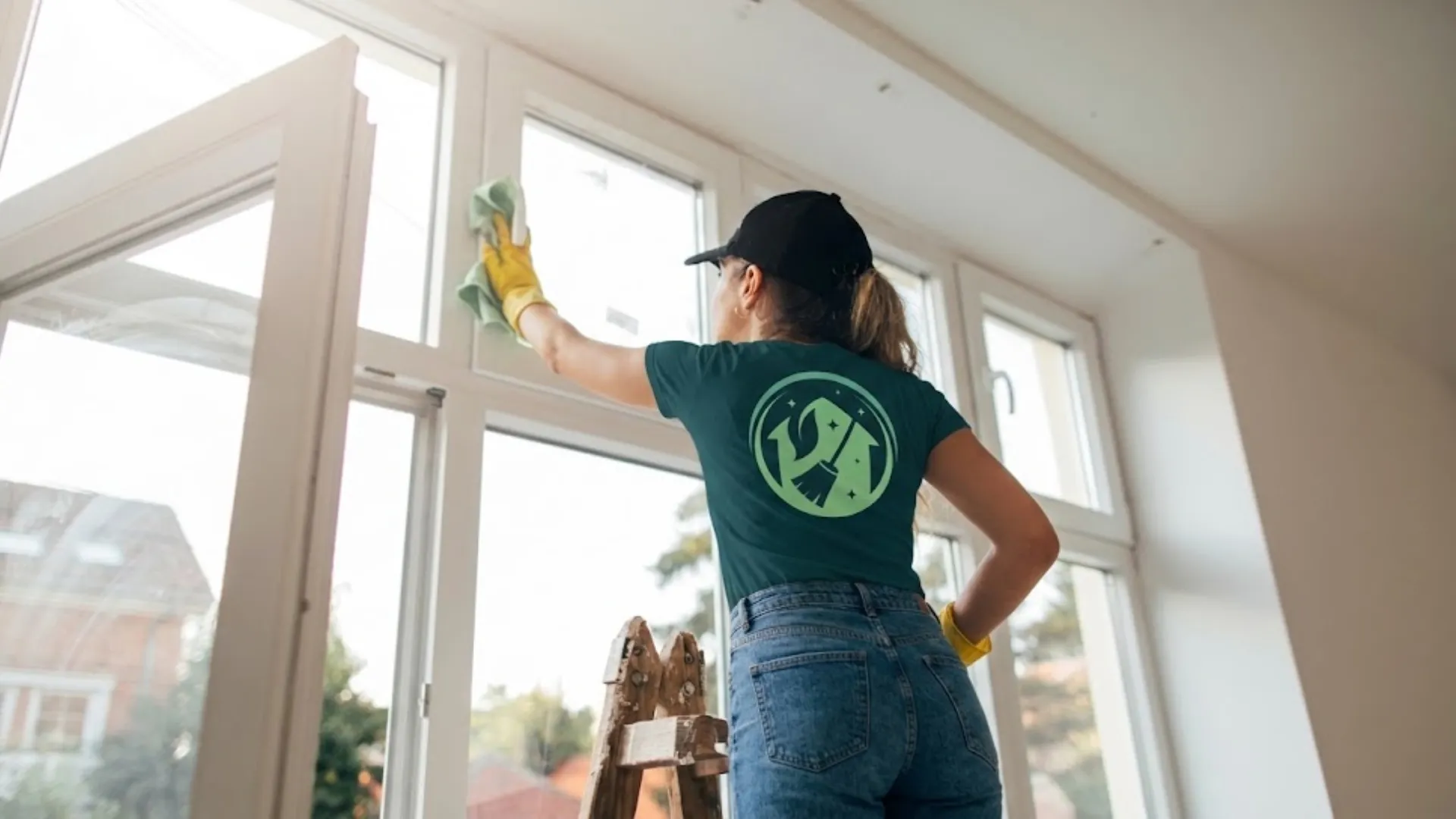
School and childcare cleaning is the daily cleaning of an education setting: classrooms and playrooms, bathrooms, hall and library, staff rooms and offices, and the hard surfaces of outdoor play areas. TLB Cleaning does this work across the Northern Rivers and the Tweed for schools, preschools, long day care centres and out of school hours care.
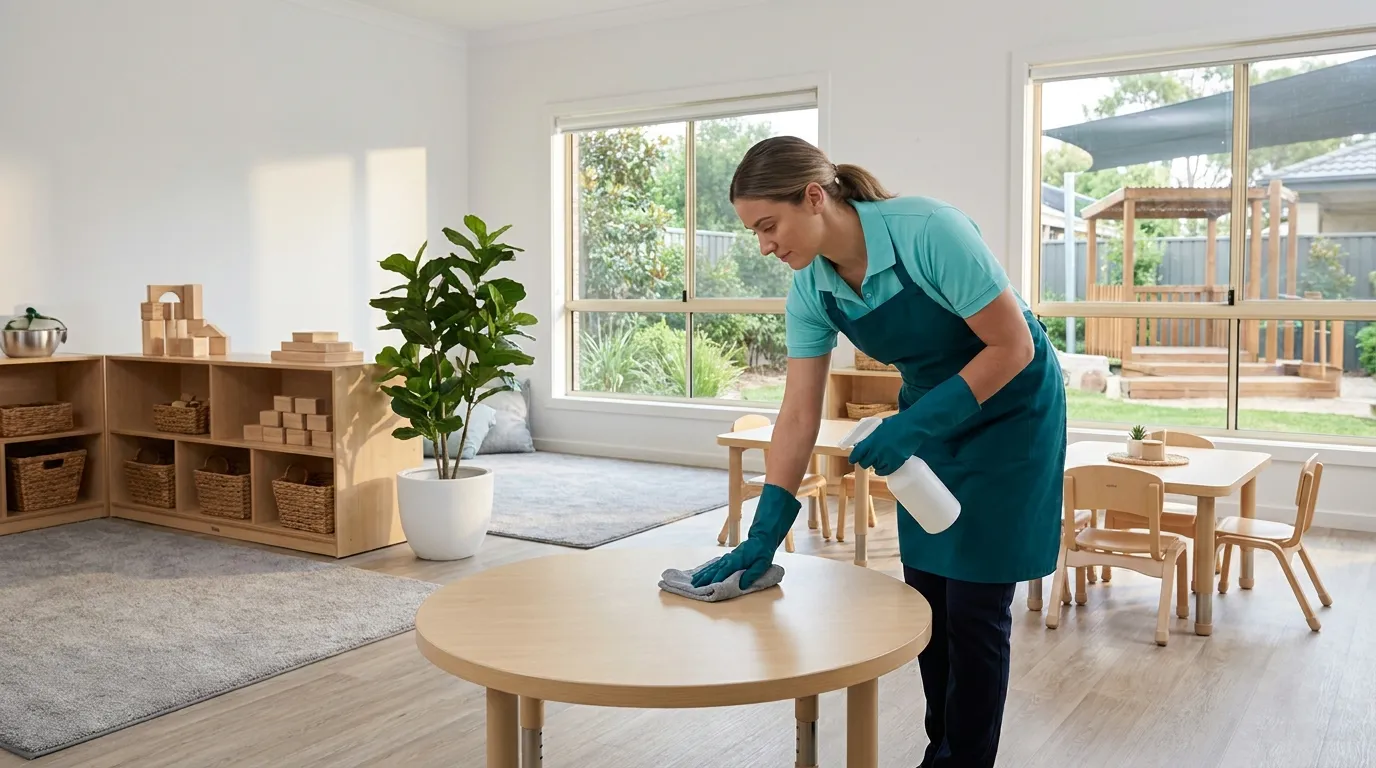
The two settings need different scopes and are best not merged. A school is cleaned when it is empty, at desk height, by people nobody meets. A childcare room is cleaned around children who put their hands and their mouths on everything at knee height, and the cleaner is somebody the educators see every day. Same trade, different job, and the sections below are split for that reason.
Ask us for the clearance numbers. Then verify them yourself.
In New South Wales, paid work in a child-related setting requires a Working With Children Check clearance, and cleaning a school or childcare centre is child-related work. The clearance belongs to the individual person, not to the company they work for, which is why "our team is all checked" is not an answer to anything. There is no company-level version of it.
The step organisations skip is the second one. As the engaging service you are expected to verify each clearance number online before that person starts, and to keep a record that you did. So ask any cleaning contractor for a clearance number per individual who will attend your site, verify each one yourself, and ask what happens when they send a replacement at short notice. Ask us the same, and hold us to producing it in writing rather than in a sentence.
Same trade, two different jobs
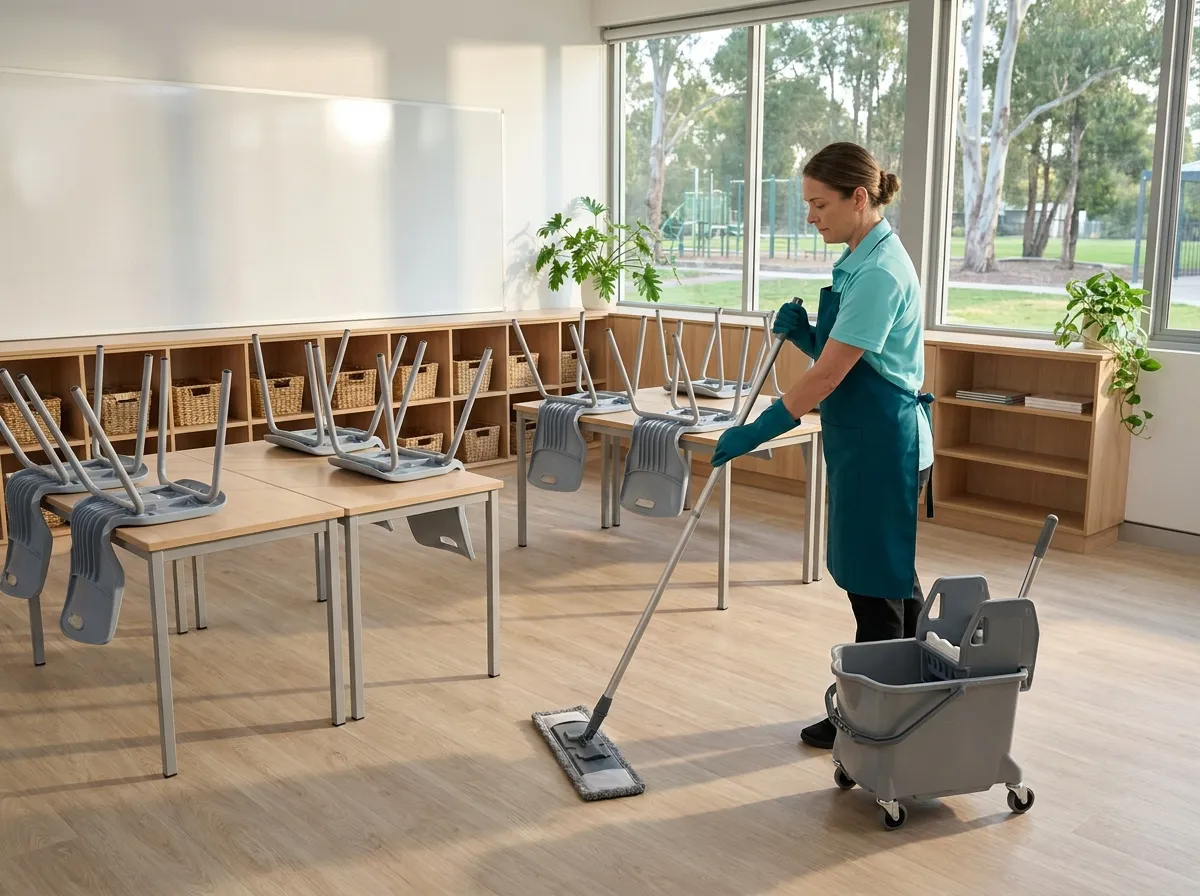
A school and a childcare centre arrive at the same contractor and need two different documents. In a school, the room is empty when we are in it, the work is at desk height, and nobody who uses the building ever meets the cleaner. Everything hard about it is scheduling: term breaks, sport, exams, and the fact that a hall floor cannot be sealed on a Tuesday.
In a childcare room, the cleaner is somebody the educators see every afternoon, the work is in the bottom sixty centimetres, and the surfaces that matter most are the ones children put in their mouths. Everything hard about it is trust and product choice. So the two scopes below are separate on purpose, and if you run both, you get both.
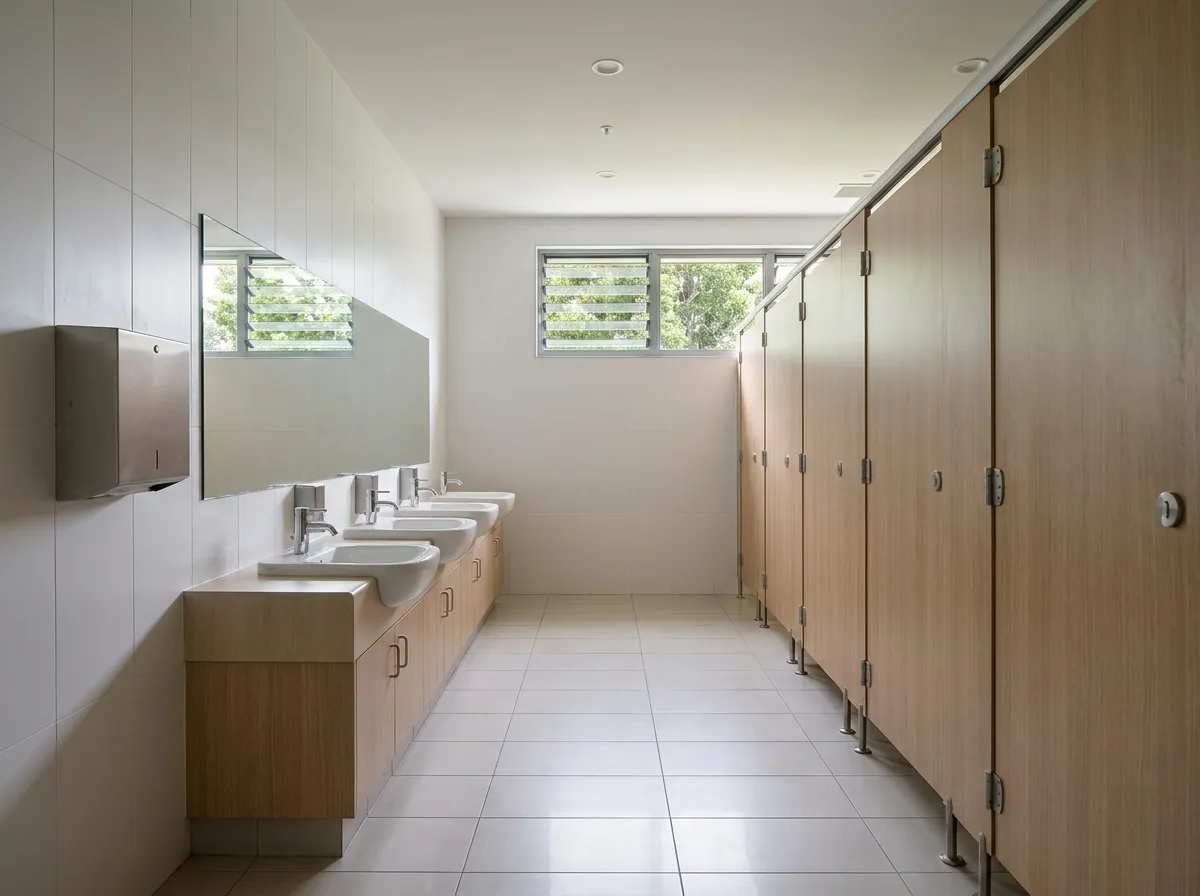 The bathrooms. What a parent judges the place on, and the first line a thin scope drops.
Thin cleaning is measured in absences
The cost of thin cleaning in a school or centre is not measured in complaints, it is measured in absences. A gastro run through a childcare room takes out a third of the children and a couple of educators for a week, and it travels by hands onto surfaces far more than it travels through the air. The surfaces it uses are the ones a thin scope drops first: door handles at child height, tap handles, the edge of the nappy change bench, the shelf every child grabs on the way past.
For a centre there is a second layer to it. Education and care services operate under the National Quality Framework, and a safe, clean, well maintained physical environment is part of what a service is assessed on. An assessor does not want to hear that you have a cleaner. They want to see what that cleaner does, how often, and how you know it happened. A written scope with frequencies against each area is the difference between an assertion and evidence, and it is the reason we write ours to be filed rather than to be quoted.
Other premises we clean
Commercial cleaning for every kind of premises across the Northern Rivers and the Tweed.
- Office cleaning
- Strata and common area cleaning
- Aged care, retirement and seniors
- Medical, clinic and salon cleaning
- Construction site
- Hospitality, venues and holiday parks
- Commercial kitchen cleaning
- Gyms and fitness studios
- Retail and shopfronts
- Warehouses and industrial sites
- Factories
- Breweries
- Commercial carpet cleaning
- Commercial pressure cleaning
- Commercial cleaning
Where we clean
Across the Northern Rivers and the Tweed.
Northern Rivers NSW
- Lismore
- Goonellabah
- Alstonville
- Wollongbar
- Casino
- Kyogle
- Nimbin
- Clunes
- Bexhill
- Dunoon
- Ballina
- East Ballina
- Lennox Head
- Skennars Head
- Wardell
- Evans Head
- Broadwater
- Woodburn
- Coraki
- Bangalow
- Byron Bay
- Suffolk Park
- Mullumbimby
- Brunswick Heads
- Ocean Shores
- New Brighton
- Billinudgel
- Federal
The Tweed
- Murwillumbah
- Tweed Heads
- Tweed Heads South
- Banora Point
- Terranora
- Bilambil
- Bilambil Heights
- Chinderah
- Fingal Head
- Kingscliff
- Casuarina
- Cudgen
- Cabarita Beach
- Bogangar
- Hastings Point
- Pottsville
- Uki
- Burringbar
- Mooball
If a town isn't listed, ask us anyway.
Easy to book, fast quoting, cost effective
Managed for you. Set day, set team, a reminder before, a message on the way, and told first when something changes.
Book a walkthrough online, or send a text, ring us or email, whichever suits. We come and look at the premises rather than pricing it off a form.
Commercial work gets priced on the site, because hours on the ground are what set the number. You get a written scope and a price per visit, so you know what you're paying for. Anything outside that scope is quoted before it happens, not added afterwards.
It's cost effective because a written scope is something you can hold us to. You're buying a defined amount of work, on a set day, from the same team each visit. No lock-in term.
How it works
- Tell us about the job.
- We confirm the price and agree a time and access.
- We do the clean, and you get a message when we're on the way.
- If something needs fixing, you hear it from us first.
Frequently Asked Questions
1. Do your cleaners hold a Working With Children Check?
They have to, and so does anyone else quoting your site. Our cleaners are employed by TLB rather than subcontracted, so there is no third party holding that paperwork.
2. When would you be on site?
After the last pickup for a centre, and after hours for a school, with the periodic work booked into term breaks. Anything that genuinely has to happen during the day — a bathroom check, a spill, an outdoor area — is done by someone your staff know, signed in through your own process, and never alone in a room with children.
3. Can you work to our own policies?
Yes, and yours wins over our standard scope wherever they differ. If your cleaning and infection control policy specifies a product, a method or a frequency, it goes on the scope in writing.
4. Who sanitises the toys?
Your educators, on your own rotation and under your own policy. It is not us being unhelpful: toy sanitising is a judgement about your service’s practice and it belongs with people trained in it, and a cleaner doing it informally creates a gap in your own records. We clean storage tubs, shelving and the surfaces the toys sit on, which is the part that supports your rotation rather than replacing it.
5. What products would you use around children?
Low-odour, low-residue products, rinsed rather than left to air dry on any surface a child will touch or mouth, and nothing stored on site within reach. Our chemicals arrive and leave with the cleaner. Where your policy names particular products or requires a particular dilution, we use yours and it is written into the scope.
6. What happens if I get in touch?
We walk the site after hours with you, including the bathrooms and the nappy change area, and ask what your own policies require. Then you get a written scope split by area with a frequency against each line, a price per visit, and a schedule for the periodic work against named term breaks. No obligation.
School and Childcare Cleaning FAQs
1. How much does school or childcare cleaning cost?
It depends on how many rooms and bathrooms there are, how much of the floor is carpet, whether a mid-day bathroom check is included, and how much outdoor hard surface there is. A centre with four rooms and a school with twenty classrooms are different jobs at different frequencies. That's why we quote rather than publish a flat rate that would be wrong for most sites. Tell us the basics and you'll have a price back quickly, with no obligation attached to it.
2. Do cleaners need a Working With Children Check in NSW?
Yes, where the work is child-related, and cleaning a school or childcare service generally is. The clearance is issued to the individual rather than to their employer, and the engaging organisation is expected to verify each clearance number online before that person starts and keep a record of doing so. Queensland uses a separate scheme, the Blue Card, so a contractor working across the border needs both. Check with the Office of the Children’s Guardian for the current requirements.
3. What are the cleaning requirements for childcare centres in Australia?
Approved education and care services operate under the National Quality Framework, and the National Quality Standard includes obligations about the physical environment being safe, clean and well maintained. The Standard sets the outcome rather than a task list, so each service translates it into its own cleaning and hygiene policy. That policy, not a contractor’s brochure, is the document a cleaning scope should be written against. This is general information, not compliance advice.
4. How often should a childcare centre be cleaned?
Daily at minimum for every room, bathroom and the nappy change area, with the main clean after the last pickup. Bathrooms and high-touch surfaces need attention during the day as well, which is why most centres run a mid-day check alongside the daily clean. Carpet extraction in a childcare room is usually two to four times a year rather than annually, because of what lands on it.
5. How does cleaning reduce illness in childcare?
Because the illnesses that close a room travel by hands and surfaces rather than through the air. Gastroenteritis and hand-foot-and-mouth both spread readily in a childcare setting, and surface cleaning of the things children actually touch — low door handles, tap handles, table edges, shelf lips, the change bench — is part of the recognised control set alongside handwashing and exclusion periods. Floors matter far less than the bottom sixty centimetres of everything else.
6. Should school cleaning happen during term breaks or during term?
Both, and they are different work. Daily cleaning happens during term, after hours. The periodic work — carpet extraction, hard floor strip and seal, high dusting, vents, internal glass — needs empty rooms and drying time, so it only really fits a term break. A scope that does not name which break each periodic task falls into tends to see none of them happen.
Schools and childcare cleaning
Ask us for the clearance numbers first.
Then a walkthrough after hours, including the bathrooms and the change area. You get a written scope with a frequency against every line, and the periodic work booked to named term breaks.