
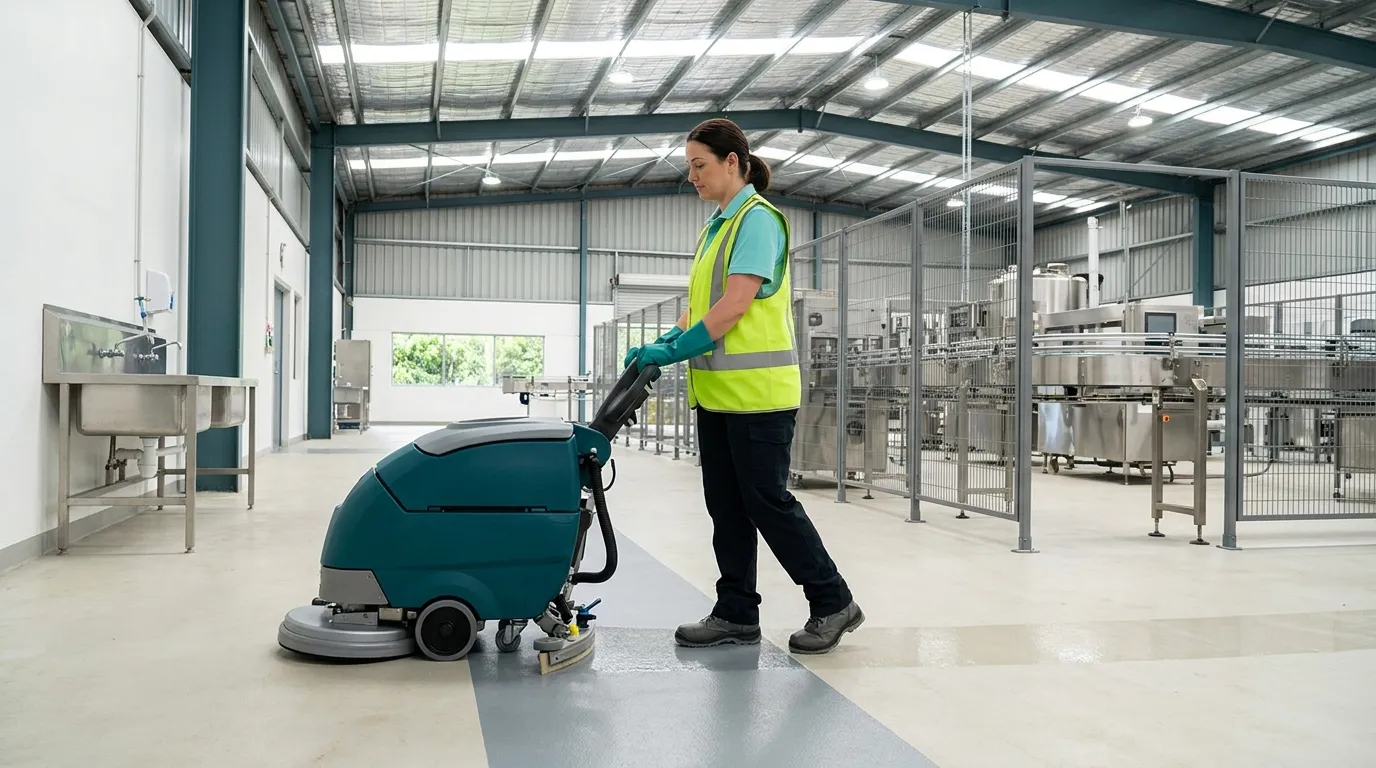
Factory and production cleaning
You get one window.
We finish inside it.
Factory and production cleaning across the Northern Rivers and the Tweed. Floors, plant surrounds, wash-downs and amenities, booked to a shutdown that was scheduled months ago and cannot move. Easy to book, fast quoting, cost effective.
Book a site walkthrough
Factory cleaning is the cleaning of a production site: the production floor and pedestrian walkways, the surrounds and exteriors of plant and equipment, wash-down areas and drains, the dry store, and the crib rooms, bathrooms and locker areas your shifts use. TLB Cleaning does this work across the Northern Rivers and the Tweed, scheduled into shutdowns rather than around them.
A warehouse stores things and a factory makes them, and that single difference is why the two need different scopes. A factory has production residue that is specific to what it produces, plant that has to be isolated before anyone touches near it, and a cleaning window that was set on a production calendar months ago. If your site stores and picks rather than manufactures, the warehouse page is written for you and this one is not.
Nobody from our team touches plant that has not been isolated.
Before any cleaning happens on or near a machine, that machine has to be shut down and isolated from every energy source, and locked and tagged out by your people under your own procedure. Not switched off. Isolated. The duty to do that sits with the site rather than with the contractor, and we will not accept it being handed to us informally at the start of a shutdown because the paperwork is running late.
The reason is that the things that hurt people are the ones that are not obvious. A machine with the power off can still hold hydraulic pressure, compressed air, a gravity load, residual heat or stored charge, and unexpected start-up during cleaning is one of the recognised ways people are killed in factories. So we clean what is isolated and tagged, we clean exteriors and surrounds of what is not, and we do not enter confined spaces at all, which need a permit and training we do not hold.
One window, three stages
In this order, because the floor gets dirty again while the plant is being done and the amenities have to be ready for the shift that walks in at the end.
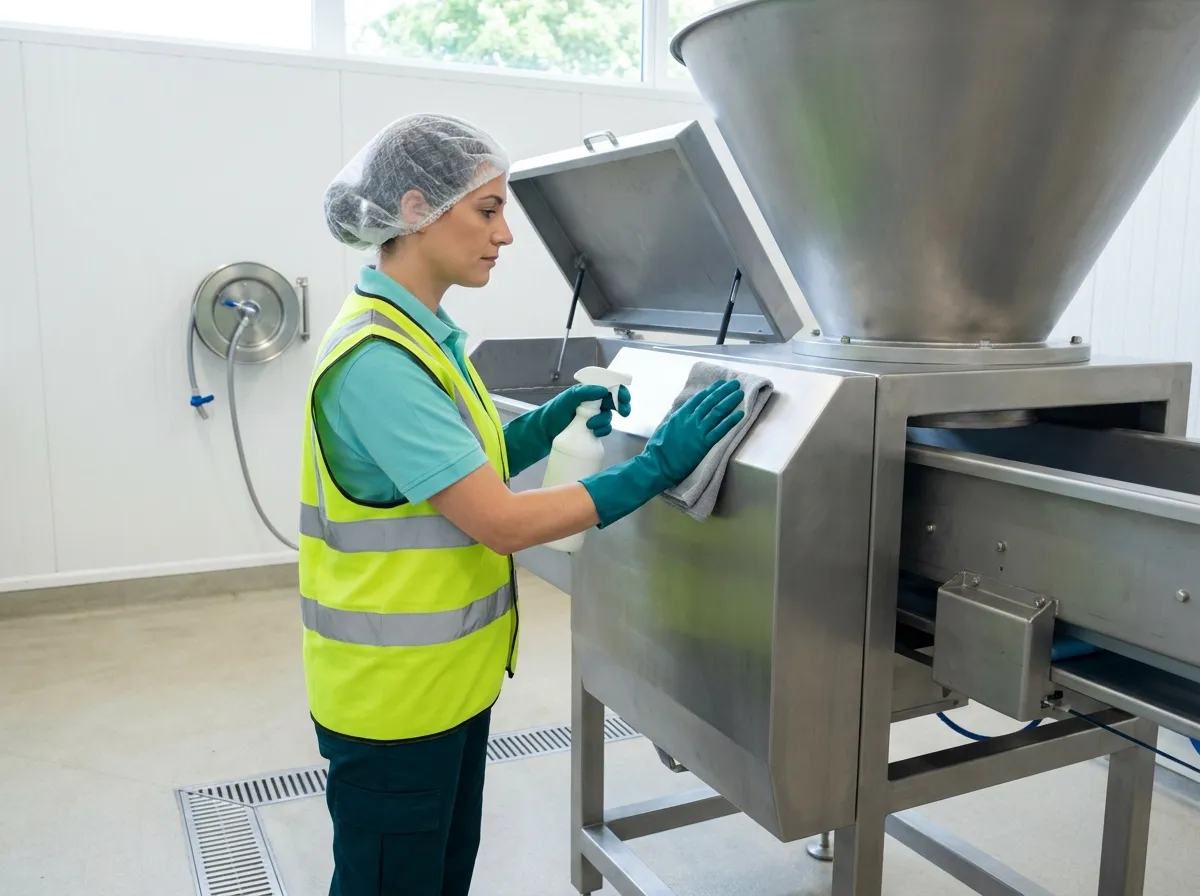
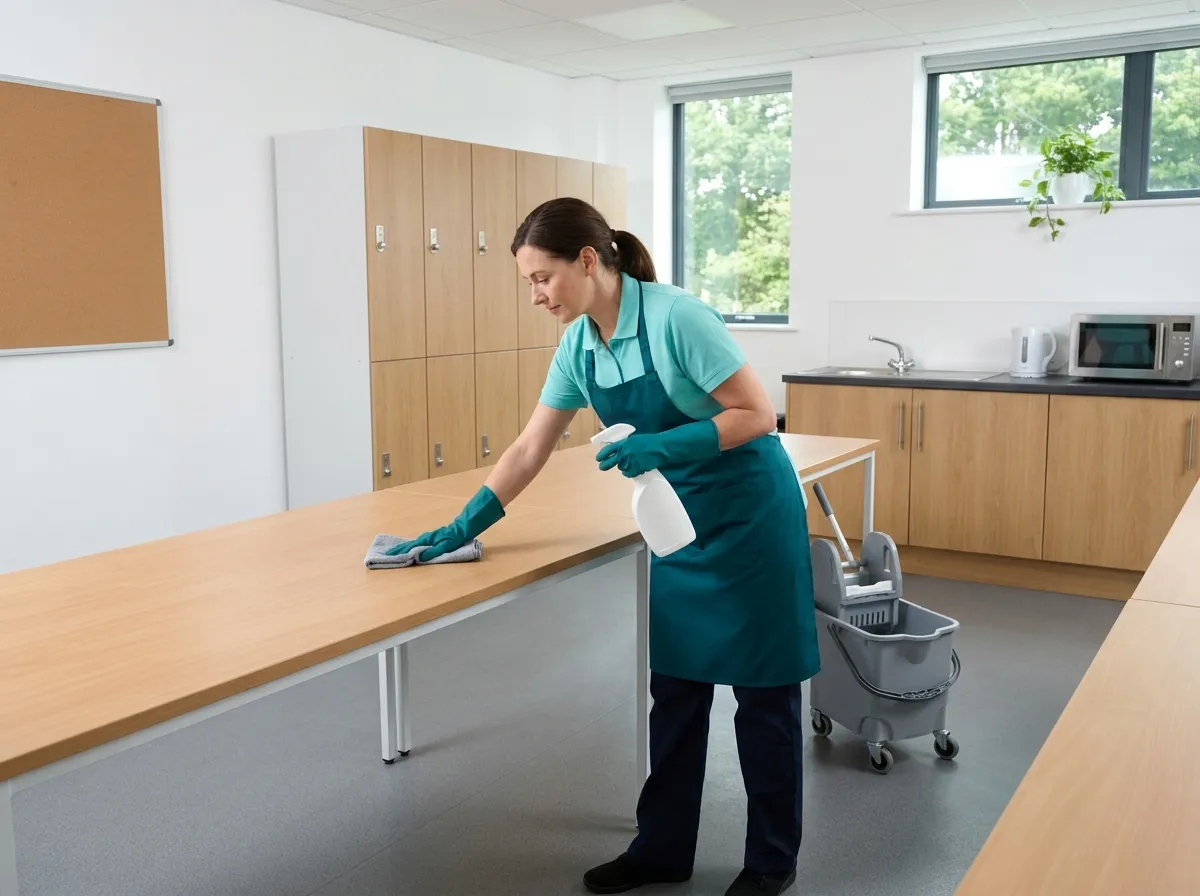
A shutdown is not a booking
A shutdown is not a booking. It is a date that was set on a production calendar months ago, that a maintenance contractor, an electrician, a calibration technician and possibly an auditor are all working to, and that costs the business real money for every hour it runs over. Nobody in that window is waiting on the cleaner, and nobody in it can absorb a cleaner who has underestimated the job.
So the only useful thing a cleaning contractor can offer a production manager is an honest number of hours and enough people to hit it. That means walking the site during production rather than during the shutdown, counting the plant surrounds properly, and telling you if the window you have is too short. We would rather lose the job at the walkthrough than be the reason a line restarts late.
The other half is what happens between shutdowns. Most factories only think about cleaning in the window, which means the site degrades for eleven weeks and then gets rescued in one. It is the most expensive way to do it: residue that has been baked on for a quarter takes several times longer to remove than residue from a fortnight ago, so the shutdown job grows every cycle.
The better pattern is a small recurring visit for amenities, walkways and the floor, with the heavy plant work saved for the window. Then the shutdown is a shutdown rather than a recovery, and the hours you are buying in it stay predictable from one quarter to the next.
What actually decides the price
Four variables, and the first one is why nobody can quote your factory over the phone.
What you actually make
Flour, sugar, oil, resin, timber dust and metal swarf are six different cleaning problems with six different methods, and one of them will be yours. This is the single biggest variable and it is the reason a factory scope cannot be written from a template or quoted over the phone.
How much of it a machine can reach
Open floor is fast. Plant surrounds, the gaps between units, under a conveyor and behind a guard are all hand work, and hand work is where the hours go. Two sites with the same floor area can differ threefold on this alone.
How long the window is
A job that fits comfortably into a three-day shutdown and the same job compressed into an overnight are different prices, because the second one needs more people at once and often penalty rates. The window is the constraint, not the work.
How long since the last one
Residue hardens, and hardened residue takes several times longer than fresh. The first clean on a site that has never had a proper one is always the biggest number you will see from us, and it should come down markedly by the second cycle. If it does not, ask us why.
Here, cleaning sits upstream of production
In a factory, cleaning sits upstream of production rather than beside it, which is why it usually belongs in an operations budget rather than a facilities one. Residue on a line is a contamination risk and a quality risk before it is a tidiness one. Residue on a floor is a slip risk in a building full of moving plant. Residue in the roof structure, if what you make is flour, sugar, timber or certain plastics and metals, is a fire and explosion risk. And residue anywhere is what feeds a pest problem, because pests follow food and harbourage rather than dirt.
The other thing that moves it upstream is the audit. If you produce food, your premises, fixtures, fittings and equipment have to be kept clean and sanitary, and in practice cleaning is a prerequisite program inside your own HACCP-based food safety plan — with named tasks, frequencies, products and verification records. Customer and certification audits go looking for exactly that documentation. A cleaning arrangement that exists as a verbal understanding with a contractor cannot produce it, no matter how well the site is actually being cleaned. That is the real argument for a written scope here, and it is why we write ours to be filed rather than quoted.
Other premises we clean
Commercial cleaning for every kind of site across the Northern Rivers and the Tweed.
- Office cleaning
- Strata and common area cleaning
- Aged care, retirement and seniors
- Medical, clinic and salon cleaning
- Construction site
- Hospitality, venues and holiday parks
- Commercial kitchen cleaning
- Schools and childcare centres
- Gyms and fitness studios
- Retail and shopfronts
- Warehouses and industrial sites
- Breweries
- Commercial carpet cleaning
- Commercial pressure cleaning
- Commercial cleaning
Where we clean
Across the Northern Rivers and the Tweed.
Northern Rivers NSW
- Lismore
- Goonellabah
- Alstonville
- Wollongbar
- Casino
- Kyogle
- Nimbin
- Clunes
- Bexhill
- Dunoon
- Ballina
- East Ballina
- Lennox Head
- Skennars Head
- Wardell
- Evans Head
- Broadwater
- Woodburn
- Coraki
- Bangalow
- Byron Bay
- Suffolk Park
- Mullumbimby
- Brunswick Heads
- Ocean Shores
- New Brighton
- Billinudgel
- Federal
The Tweed
- Murwillumbah
- Tweed Heads
- Tweed Heads South
- Banora Point
- Terranora
- Bilambil
- Bilambil Heights
- Chinderah
- Fingal Head
- Kingscliff
- Casuarina
- Cudgen
- Cabarita Beach
- Bogangar
- Hastings Point
- Pottsville
- Uki
- Burringbar
- Mooball
If a town isn't listed, ask us anyway.
Easy to book, fast quoting, cost effective
Managed for you. Set day, set team, a reminder before, a message on the way, and told first when something changes.
Book a walkthrough online, or send a text, ring us or email, whichever suits. We come and look at the premises rather than pricing it off a form.
Commercial work gets priced on the site, because hours on the ground are what set the number. You get a written scope and a price per visit, so you know what you're paying for. Anything outside that scope is quoted before it happens, not added afterwards.
It's cost effective because a written scope is something you can hold us to. You're buying a defined amount of work, on a set day, from the same team each visit. No lock-in term.
How it works
- Tell us about the job.
- We confirm the price and agree a time and access.
- We do the clean, and you get a message when we're on the way.
- If something needs fixing, you hear it from us first.
Frequently Asked Questions
1. Can you work inside our shutdown window?
That is the whole job, and the answer depends on an honest count rather than on enthusiasm. We walk the site during production, count the plant surrounds and the hand-work areas properly, and give you an hours figure and the crew size needed to hit your window. If the window is too short for the scope you want, we will tell you at the walkthrough and offer you a shorter scope instead of a longer shutdown.
2. Who isolates the plant?
You do, under your own procedure, and it has to be done and tagged before we start. That duty sits with the site rather than with us, and we will not take it on informally because a shutdown is running behind. We clean what is isolated and tagged, we clean surrounds and exteriors of what is not, and we do not enter confined spaces at all.
3. Can you clean inside a food production environment?
Cleaning inside a food environment has to run to your own HACCP-based plan: your approved products, your dilutions, your sequence and your verification records, with every clean documented so it can be audited. If we cannot meet your program, we will say so rather than work around it.
4. Do you do the recurring work as well as shutdowns?
Yes, and it is usually the better way to run it. Amenities, walkways, the floor and the accessible plant surrounds on a weekly or fortnightly visit, with the heavy plant work saved for the shutdown. Residue that is a fortnight old takes a fraction of the time that residue baked on for a quarter does, so the recurring visit tends to pay for itself in shutdown hours you do not buy.
5. What chemicals would you use on our site?
Whatever your site approves, and nothing else. Industrial degreasers and descalers include caustic and acidic products that damage the wrong substrate and injure people who use them without training, so the product list belongs on the scope with the Safety Data Sheets attached rather than in a cleaner’s van. Where your program names a product, yours wins.
6. What happens if I get in touch?
We walk the site while it is running, which is the only way to see where the residue actually goes, and we ask what you make before we ask how big the floor is. Then you get a written scope by stage, an hours estimate against your window, a crew size, and a recommendation on what should be recurring rather than in the shutdown. No obligation.
Factory Cleaning FAQs
1. How much does factory cleaning cost?
A good quote shows shutdown work and recurring work separately. The price moves with what the site produces, how much of the area is hand work rather than machine work, how long the window is, and how long since the last proper clean. That's why we quote rather than publish a flat rate that would be wrong for most sites. Tell us the basics and you'll have a price back quickly, with no obligation attached to it.
2. What is lockout tagout and why does cleaning need it?
It is the process of isolating plant from every energy source and physically locking and tagging the isolation so it cannot be reversed while someone is working on the machine. Cleaning needs it because cleaning puts hands, cloths and water inside guarding, and unexpected start-up during that work is a recognised cause of serious injury and death. Switching a machine off is not isolation: hydraulic pressure, compressed air, gravity loads, residual heat and stored electrical charge can all remain.
3. What are the cleaning requirements for a food factory in Australia?
Food businesses must keep premises, fixtures, fittings and equipment in a clean and sanitary condition under the Food Standards Code, and a food production site normally meets that through a HACCP-based food safety program in which cleaning is a prerequisite program — documented tasks, frequencies, approved chemicals and verification records. Customer and certification audits look for that documentation. Your own program and your regulator are the authoritative sources. This is general information, not compliance advice.
4. How is a factory clean verified?
In a general industrial site, visually and against the written scope. In food production it goes further: visual inspection plus swab or ATP testing on food contact surfaces, recorded against the cleaning schedule, so there is evidence the clean achieved something rather than that it happened. Verification is your program’s responsibility rather than the contractor’s, but the contractor’s records have to be good enough to sit inside it.
5. Is factory dust dangerous?
Some of it, and it depends what you make. Flour, sugar, timber, and certain plastics and metals produce combustible dust, and once it accumulates on ledges, plant and roof structure it becomes a fire and, in the right conditions, explosion risk. Metal swarf and fine mineral dust are abrasive and respiratory concerns instead. The common thread is that the dangerous accumulation is usually the one nobody can reach without an elevating work platform.
6. What is the difference between warehouse and factory cleaning?
A warehouse stores product and a factory makes it, and everything else follows from that. Warehouse cleaning is largely floors, racking, docks and amenities, priced on area and access, and done on a recurring schedule. Factory cleaning adds production residue specific to what is made, plant that must be isolated before anyone works near it, and a shutdown window that is fixed months in advance. Same trade, materially different job.
Factory and production cleaning
Tell us what you make first.
Then we walk the site while it is running, count the hand work honestly, and give you an hours figure against your window. If the window is too short, you will hear it from us before you book it.