

Guide · Homes and hosting
Three methods, one of which
is not what its name says.
Hot water extraction, low-moisture dry cleaning and rotary shampoo. What each one actually does to a carpet, how long each takes to dry, and which one your floor and your deadline want.
Get an instant quote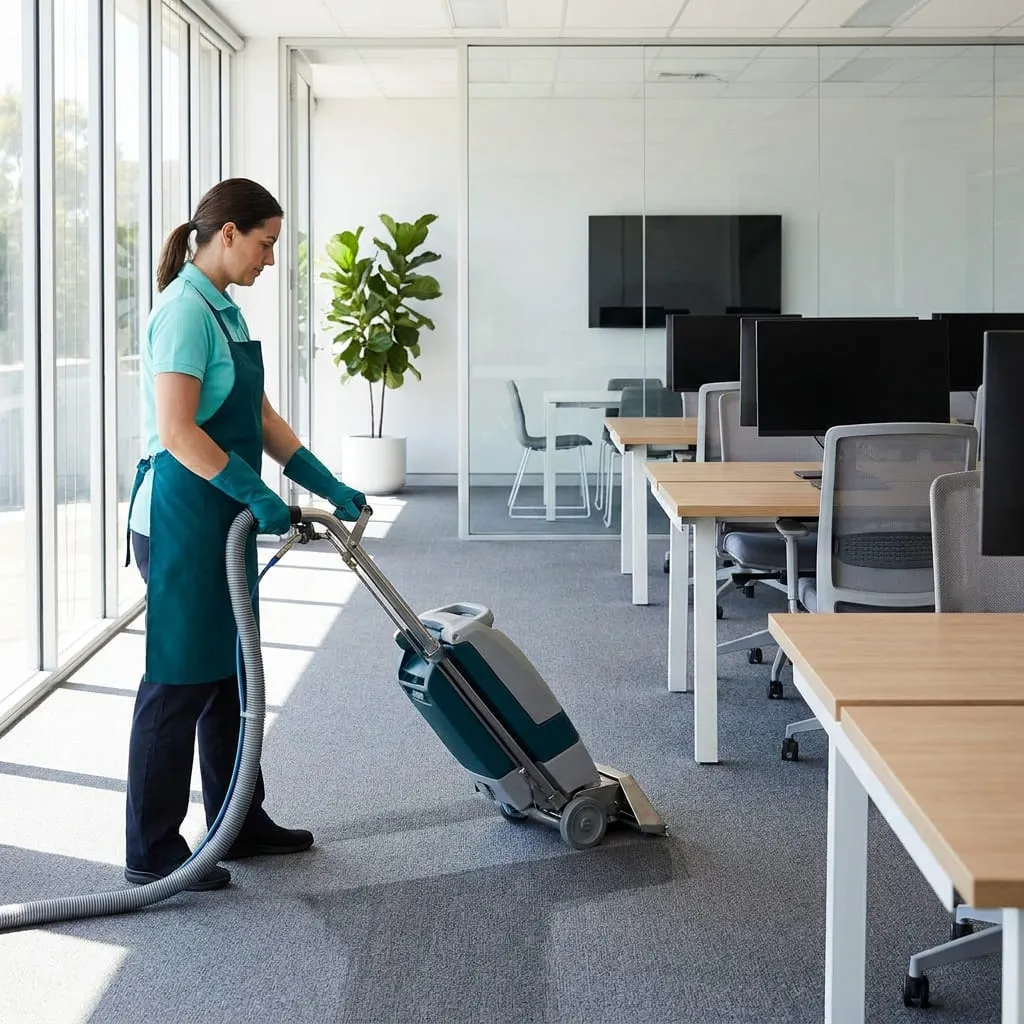
There are three carpet cleaning methods in common use: hot water extraction, low-moisture dry cleaning, and rotary shampoo. They differ in how much water goes into the carpet, how much soil comes back out, and how long the floor is out of action afterwards.
Steam cleaning and hot water extraction are two names for the same method, and neither involves steam. Heated water and cleaning solution are pushed into the pile under pressure and drawn straight back out with the soil in them. It is the method most carpet manufacturers name in their own care instructions, and it removes soil rather than redistributing it.
The three methods, side by side
Read across a row rather than down a column. Every method here is legitimate; they are simply built for different jobs.
| What each one actually does | Hot water extraction | Low-moisture / dry | Rotary shampoo |
|---|---|---|---|
| How it works | Heated water and solution injected under pressure, vacuumed straight back out | A polymer or absorbent pad or compound that traps soil, then gets vacuumed away | Foaming detergent worked into the pile with a rotary brush, vacuumed once dry |
| How much soil it removes (Including what has settled at the base of the pile) | Most | The surface layer | The surface layer, and it leaves some behind |
| Typical drying time (Longer in a humid Northern Rivers summer, whichever method) | Several hours | Under an hour to a couple of hours | Several hours, then a second vacuum |
| Reaches the backing | |||
| Risk of over-wetting | Real, and it is why technique matters | Very low | Moderate |
| Risk of leaving residue | Low if rinsed properly | Low | High, and it is this method’s main problem |
| Best for | An annual or six-monthly deep clean, and anything actually dirty | Maintenance between deep cleans, and floors that cannot be out of action | Little, now. It survives mostly on older commercial jobs |
| Named in most carpet makers’ care instructions | Sometimes, as maintenance |
The honest summary: extraction is the clean, low-moisture is the maintenance in between, and shampoo is the one that was superseded for a reason. A cleaner offering only the fast method for the annual deep clean is offering you a lighter job at a similar price.
The three methods in full
What is actually happening to the pile in each case, which is what decides the result.
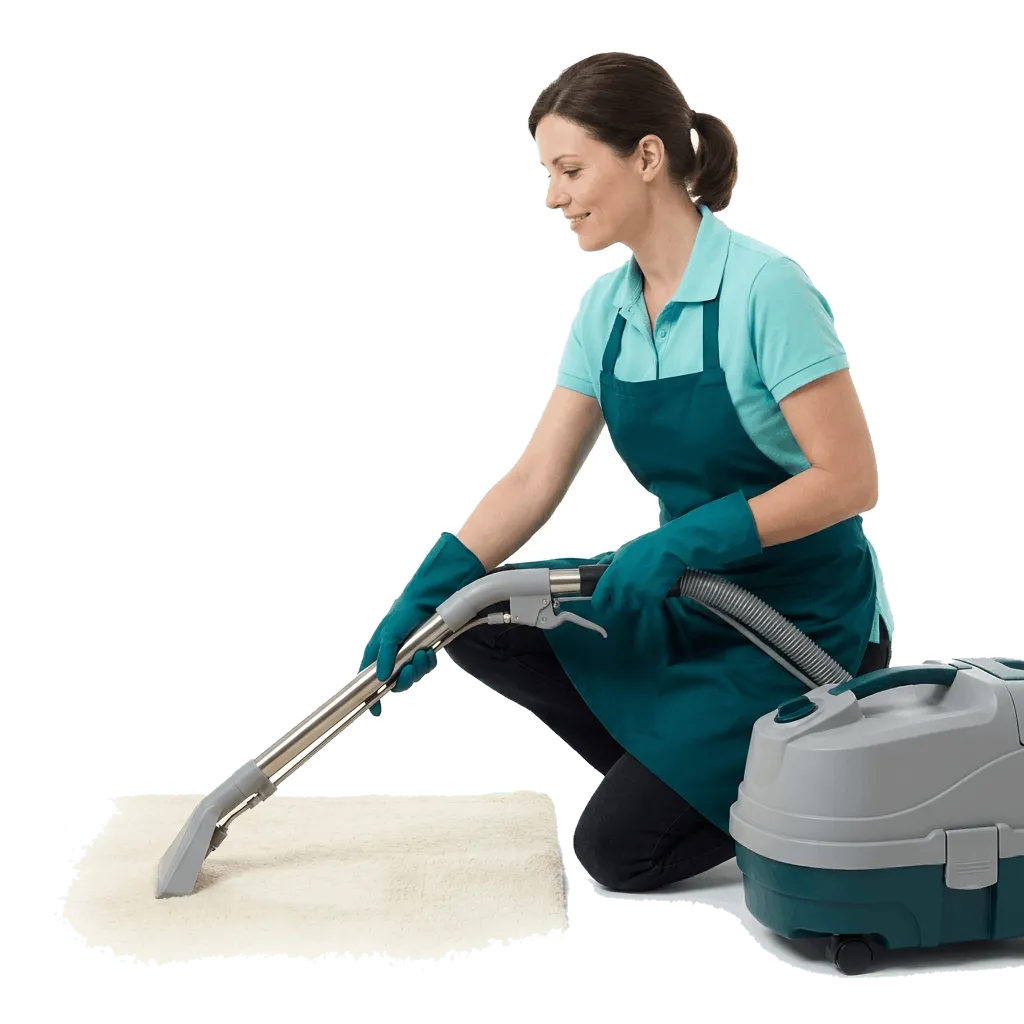
Hot water extraction, the one people call steam
A wand injects heated water and solution into the pile under pressure and vacuums it straight back out in the same pass. The soil leaves the building in the waste tank rather than being broken up and left in place.
It is the most thorough of the three and the only one that reaches down to the base of the pile and the backing, which is where the grit that wears carpet out actually lives. It is also the one with a real technique requirement: too much water and not enough extraction is how a carpet ends up damp underneath and smelling of it a fortnight later.
Expect the floor to be out of action for a few hours, longer in humid weather. Air movement across the pile is what shortens that, not heat.
Low-moisture and dry methods
A family of methods rather than one: encapsulation, where a polymer crystallises around each soil particle so it can be vacuumed out later; bonnet cleaning, where an absorbent pad on a rotary machine lifts soil off the tips of the pile; and dry compound, where absorbent granules are brushed in and vacuumed out.
All three are fast, use very little water, and dry quickly, which makes them genuinely useful in an office that has to open, a rental between guests, or a hallway that cannot be closed off. What none of them do is reach the bottom of the pile.
The caution with bonnet work specifically is that a rotary pad run hard on a cut pile can fuzz or distort it. It is a maintenance tool, and used as one it is fine.
Rotary shampoo, and why it faded
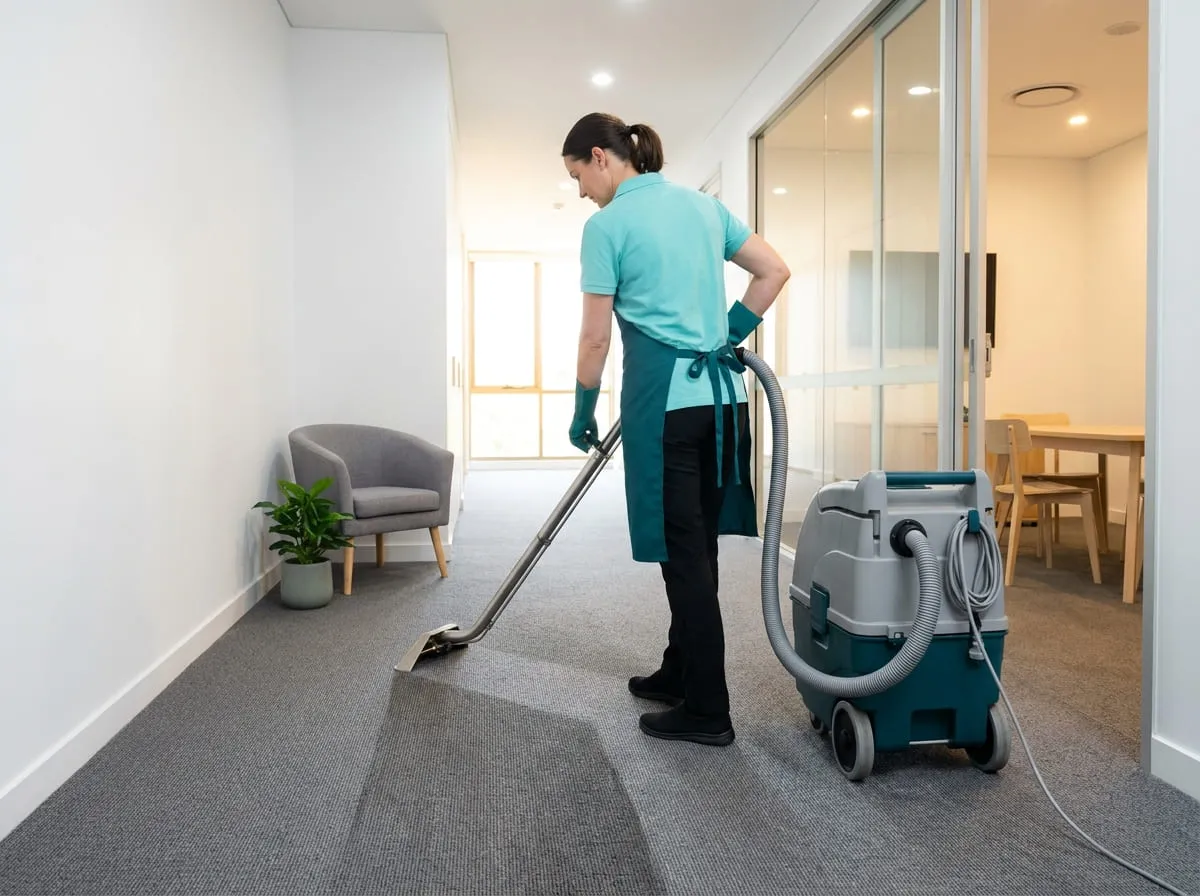
A foaming detergent is worked into the pile with a rotary brush, left to dry, and vacuumed out. It was the standard method for decades and it does lift a lot of surface soil, so a shampooed carpet can look impressive on the day.
Its problem is what stays behind. Detergent residue left in the pile does not stop being sticky, so it collects the next lot of soil, and the traffic lanes come back darker and faster than they were before the clean. If a carpet has been shampooed repeatedly, the fastest way to fix it is a proper extraction clean with a rinse step, which is the opposite of what most people expect.
You will still meet it, mostly on older commercial contracts and occasionally on a very low domestic quote. If a quote is unusually low and the method is not named, this is worth asking about.
The method matters less than the fibre
Before anyone chooses a method, somebody should establish what the floor is made of. A fitted synthetic carpet is forgiving. Wool is not: it takes less water, a gentler pH and much more care over drying, and it will felt or shrink if it is treated like nylon.
Viscose and rayon are the ones to be careful of, and they turn up constantly in the flat-weave rugs sold as "art silk" or "bamboo silk". They lose strength when wet and can mark permanently from clean water alone. A viscose rug wet-cleaned on the floor of a living room is usually not damaged, it is finished. Jute-backed rugs are the other trap: over-wetting browns them from the backing up, and the stain comes through the face of the rug days later.
So the useful question to ask a carpet cleaner is not which method they use. It is what they will do to find out what your floor is, and what they will say if the answer is "this one should not be wet-cleaned here". A cleaner who has a fibre test and a referral for rug-plant work is telling you something about the whole job.
Which one we use
We clean carpet and rugs by hot water extraction, because it is the method that removes soil rather than moving it around, and it is the one carpet makers name in their own care instructions.
That is not a claim that the fast methods are worthless. Encapsulation and dry compound have a real place in maintenance, particularly on commercial floors that cannot be closed for an afternoon, and our commercial carpet work is built around exactly that constraint. What we will not do is sell you a maintenance clean at the price of a deep one.
On rugs we look at the fibre before we look at the machine, and if a rug should go to a rug plant rather than be cleaned in your living room, we say so instead of taking the job.
Drying, and why February is different
Humidity is the reason a carpet that dries in three hours in July takes most of a day in February. Air cannot take up moisture it is already holding, so on a still, humid afternoon on this coast a carpet simply stops drying.
What actually helps:
- Air movement across the pile, not heat. A pedestal fan aimed low along the floor does more than an air conditioner set cold.
- Ventilation as well as circulation. Moving humid air around a closed room achieves very little; get some of it out.
- A dehumidifier if you own one, which beats both.
- Staying off it, or walking on it only in clean socks. Bare feet and shoes both put back what was just removed.
- Leaving furniture off it until it is dry. Timber legs on damp wool is how you get a stain shaped like a chair.
If a cleaner tells you an extraction clean in a humid February will be dry in an hour, they are either using a surface method or they have not been doing this on the Northern Rivers for long.
Read next
The three guides that follow on from this one.
- The end of lease checklistRoom by room, in the order the job is actually worked, with the lines agents mark first.
- What is in a deep cleanThe line between a regular clean, a deep clean and a bond clean, drawn task by task.
- Choosing a commercial cleanerWhat to ask before you sign, and which low quote is low because something was left out.
Carpet cleaning methods: frequently asked questions
1. Which carpet cleaning method is best?
For an annual or six-monthly deep clean, hot water extraction, because it is the only one of the three that removes soil from the base of the pile rather than the surface. Low-moisture methods are better when the floor has to be walked on within the hour. Rotary shampoo has largely been superseded because of the residue it leaves.
2. Is steam cleaning the same as hot water extraction?
Yes, and no steam is involved in either. Heated water and cleaning solution are injected into the pile under pressure and vacuumed straight back out with the soil. Nothing is being sterilised. "Steam cleaning" is simply the name that stuck with the public, and the trade name for it is hot water extraction.
3. How long does carpet take to dry?
An extraction clean is usually a few hours; low-moisture methods can be under an hour. Humidity changes both substantially, and on this coast in a wet February everything takes longer. Air movement across the floor helps far more than heat, and a dehumidifier helps more than either.
4. Can wool carpet and rugs be steam cleaned?
Wool can be wet-cleaned, but not the way a synthetic can. It needs less moisture, a gentler pH and much closer attention to drying, and treated like nylon it will felt or shrink. Ask any cleaner what they change for wool. If the answer is nothing, that is the answer.
5. Why did my carpet get dirty again so quickly?
Almost always detergent residue left in the pile. It stays tacky, holds the next lot of soil, and the traffic lanes come back darker than they were before the clean. It is the characteristic failure of shampoo methods and of any clean without a proper rinse step, and a rinsing extraction clean is what fixes it.
6. What about a rug that might be viscose?
Get the fibre identified before anybody puts water near it. Viscose and rayon, often sold as art silk or bamboo silk, lose strength when wet and can mark permanently from clean water alone. A rug like that belongs at a rug plant with a controlled dry, not on the floor of a living room.
More guides
Everything else we have written down.
- What the law actually says
- The end of lease checklist
- What a bond clean costs
- What house cleaning costs
- What is in a deep clean
- The Airbnb turnover checklist
- The Byron Shire 60-day cap
- Choosing a commercial cleaner
- Carpet and rug cleaning
- Commercial carpet cleaning
- Upholstery and lounge cleaning
- All guides
Something we have not covered? Ask us and we will write it.
Where we clean
Northern Rivers, the Tweed and the Southern Gold Coast.
Northern Rivers NSW
- Lismore
- Goonellabah
- Alstonville
- Wollongbar
- Casino
- Kyogle
- Nimbin
- Clunes
- Bexhill
- Dunoon
- Ballina
- East Ballina
- Lennox Head
- Skennars Head
- Wardell
- Evans Head
- Broadwater
- Woodburn
- Coraki
- Bangalow
- Byron Bay
- Suffolk Park
- Mullumbimby
- Brunswick Heads
- Ocean Shores
- New Brighton
- Billinudgel
- Federal
The Tweed
- Murwillumbah
- Tweed Heads
- Tweed Heads South
- Banora Point
- Terranora
- Bilambil
- Bilambil Heights
- Chinderah
- Fingal Head
- Kingscliff
- Casuarina
- Cudgen
- Cabarita Beach
- Bogangar
- Hastings Point
- Pottsville
- Uki
- Burringbar
- Mooball
Southern Gold Coast QLD
- Coolangatta
- Bilinga
- Tugun
- Currumbin
- Palm Beach
- Elanora
- Burleigh Heads
- Burleigh Waters
- Miami
If a town isn't listed, ask us anyway.
Carpet and rug cleaning
Tell us what the floor is, first.
We look at the fibre and the wear before we quote, and we tell you what will lift and what is in there for good.